
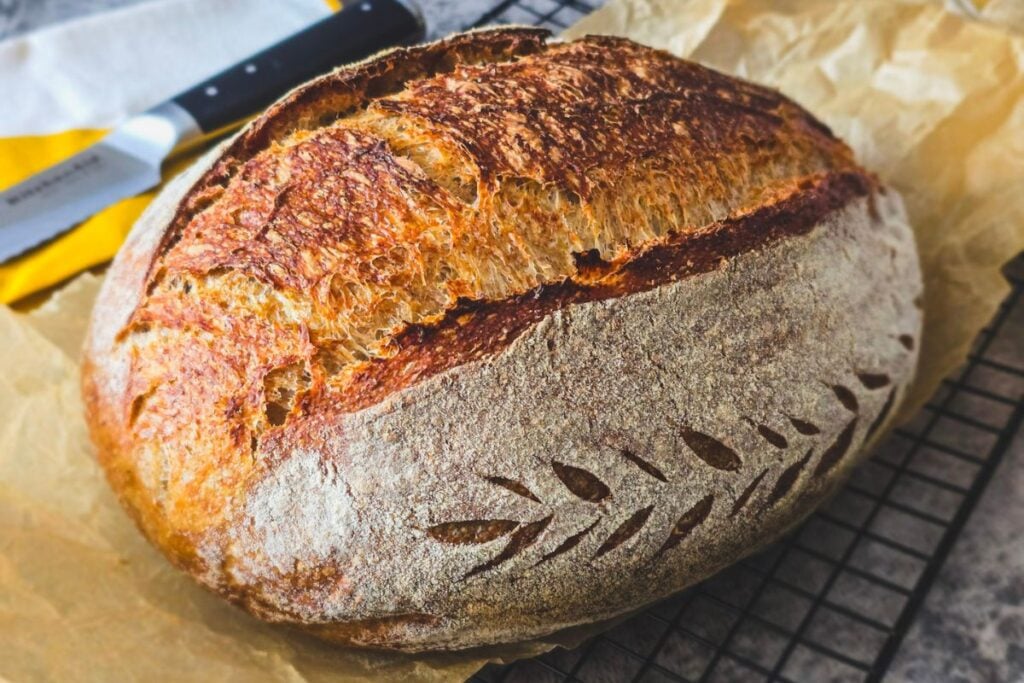
I’ve baked sourdough every week for ~4 years, and this brown sourdough is the one I trust when life gets busy. It’s nutty from wholemeal flour, but with a soft crumb even though it packs in that extra fiber. I have been testing this recipe over 18 months so it’s both reliable and a little forgiving. If you’ve ever over‑proofed (me too, more times than I care to count!), this loaf still delivers flavor, a beautiful crust and that elusive oven-rise that we, sourdough bakers are dreaming of.
Why you’ll love this brown sourdough
Because you’ll learn: a simple one‑bowl mix method, no kneading, how to recognize the signs when your dough is ready, my cold‑start bake at 220°C, and a quick 20‑minute freezer trick for cleaner scoring.

- Reliable & forgiving: I ‘ve tested it over 18 months; still great even if bulk runs long.
- Nutty flavor, better texture: wholemeal adds depth but keeps a tender crumb.
- Cold‑start bake: easy, consistent oven spring without fuss or burning your hands.
- Beginner‑friendly: one bowl, three to four folds, clear visual cues and fits around your busy life.
- Gut‑friendly fermentation: slow rise, simple ingredients and more fiber from the wholewheat flour.
Watch how to make sourdough with Wholemeal flour

Ingredients you’ll need
Makes: 1 loaf (~930 g dough)
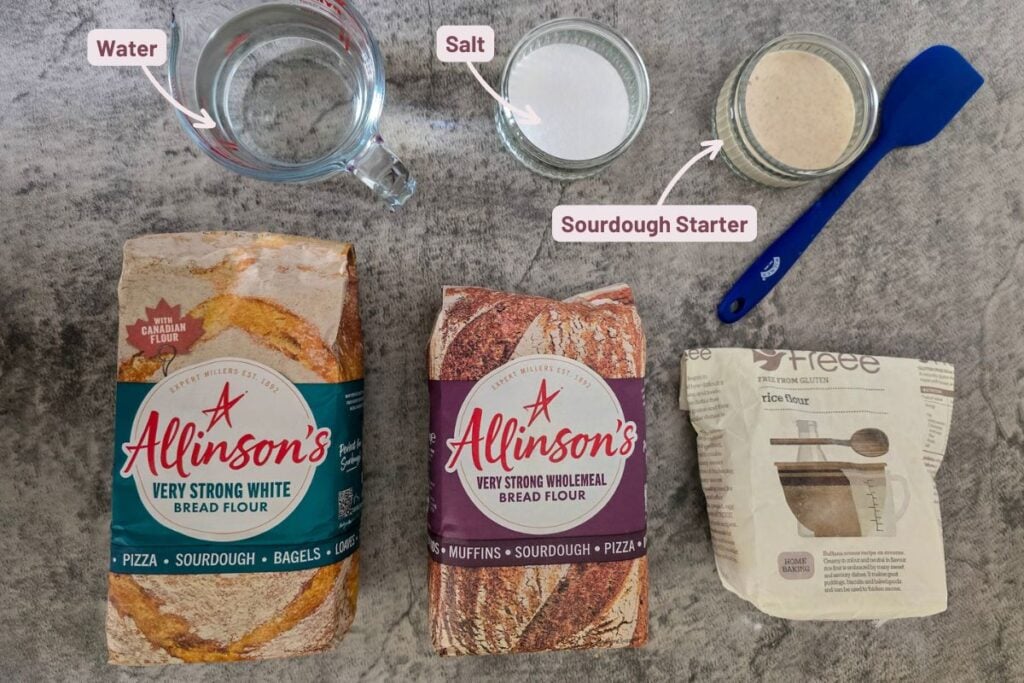
- Very strong whole wheat / brown bread flour: 250 g
- Very strong white bread flour: 235 g
- Water: 335 g (room temp)
- Fine sea salt: 10 g
- Active 100% hydration starter: 100 g
Baker’s % (incl. starter): Total flour 535 g, total water 385 g → ~72% hydration, salt ~1.9%.
Equipment:
- Digital scales
- Large mixing bowl
- Spoon or dough whisk
- Dough scraper
- Shower cap or cover
- Banneton (or bowl + tea towel)
- Parchment paper
- Lame/razor
- Cast‑iron pot with lid
- Oven mitts & cooling rack
How to make brown sourdough (step-by-step)
Time needed: 10 hours
A reliable, forgiving brown sourdough made with added wholemeal flour, more nutritious yet so soft and delightfully nutty. One‑bowl mix, gentle folds, cold‑start 220°C bake, plus a 20‑minute freezer trick for easy scoring.
- Mix (one bowl):
Add flours, water, starter and salt to a large bowl. Mix with a spoon or dough whisk until no dry spots remain. Cover with a shower cap. Rest 30 minutes.

- Stretch & Folds:
Every 20–30 minutes for about 2 hours, do a set of stretch‑and‑folds (or coil folds). Dough should feel tighter and smoother.
- Bulk fermentation:
Continue bulk at room temperature until the dough shows at least 50% rise or nearly double, a gentle dome, bubbles around the edges, and a light jiggle. In many kitchens the total bulk (rest + folds + rise) is around 6–8 hours; colder rooms may take longer.
- Shape the dough:
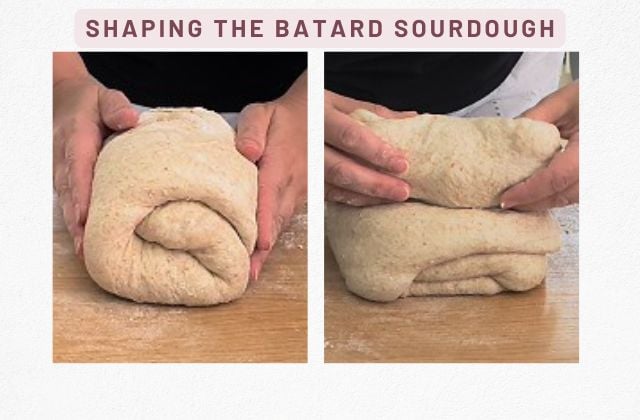
Lightly flour the bench, tip the dough out and arrange into a rough rectangle. Fold the top flap over the bottom half, then left side over two thirds to the right. Fold the right side over the left fully then roll gently from the bottom to shape into a batard. Remove the flour with the scraper to help create a good surface tension while you pull the loaf gently on the bench (seam down). Flour your hands and place it seam‑up in a rice‑floured banneton; dust the top with rice flour too. Cover and allow to proof.
- Proof
Room temperature 1–2 h (check after an hour if warm) or fridge 8–18 h (cold proof when life gets in the way, but it also helps a clean scoring).
- Freezer (optional):
If proofed at room temperature and ready to bake, set the banneton uncovered in the freezer for 20 minutes to help create a tighter skin for clean scoring.
- Score and Bake:
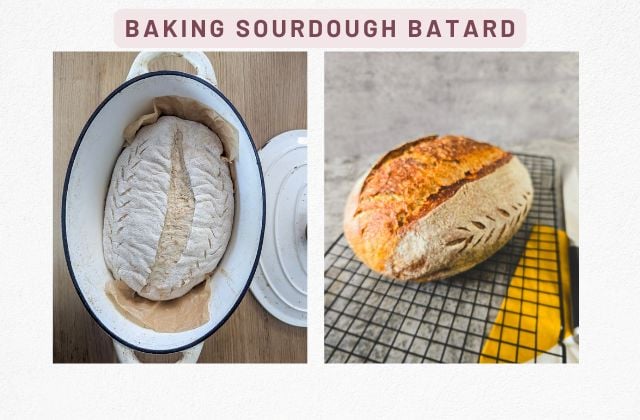
Turn the loaf onto parchment, seam‑down, and score on an angle with a sharp razor (watch the video). Set the loaf on parchment in a cold cast‑iron pot, with the lid on. Place into the oven at 220°C (428°F). Bake 30 minutes with lid on, then 15 minutes lid off to get a beautiful golden color.
- Cool & Slice:
Move to a rack and cool 1–2 hours before slicing so the crumb sets.



Pro Tips
- Watch the dough, not the clock: temperature swings change timings; rely on visual cues.
- Wet hands = less sticking: especially during folds and shaping.
- Rice flour is your friend: in the banneton and on the loaf for cleaner release and scoring.
- Scrunch the parchment paper to avoid it digging into the loaf. Place the loaf on the diagonal and cut away the corners by the sides (it should look like a hammock for your bread).
- Over‑proofed? Bake anyway. Expect smaller oven spring but great flavor.
- Pop in the freezer without cover for 20 minutes after rising in banneton if you want to bake the same day. It helps dry and harden the crust a bit for easier scoring.
- Work fast when you score, as your dough will tend to flatten a little.
- If you want a crustier loaf increase the amount of baking with lid on by 5 -10 minutes and then bake with lid off for 10 – 15 minutes. Ovens vary, so watch the color.
- Leave the loaf to cool on a rack for at least 2 hours before slicing. You can even cover it with a clean dry towel and leave it overnight.

baking schedule
Same‑day option (feed the night before):
Previous evening (~21:00): Feed starter and leave on the counter to peak overnight.
Morning: Mix & 30‑minute rest → folds every 20–30 min for ~2 h → bulk at room temp until puffy/jiggly (often total 6–8 h from mixing, longer in winter) → shape into a rice‑floured banneton; dust loaf and cover → proof 1–2 h at room temp (check at 1 h if warm) → optional: freezer 20 minutes (uncovered) for cleaner scoring → score → cold‑start 220°C bake (30 min lid on → 15 min off).
weekend baking
Feed starter Fri 21:00 → mix Sat 08:00 → folds to 10:30 → bulk to ~14:30 → shape →
proof 1–2 h or fridge 8–18 h → optional: freezer 20 minutes (uncovered) for cleaner scoring → score → cold‑start 220°C bake (30 min lid on → 15 min off).
Total time
It depends… But… you could have a fresh steamy crunchy loaf in under 10 hours, with not much active handling time.
Nutritional benefits
Wholemeal flour adds prebiotic fiber, not to mention B-vitamins and minerals like iron and magnesium, these are well known benefits of wholegrains. The long sourdough fermentation may make those minerals easier for your body to absorb and may slow how quickly you digest the bread, for steadier energy, although not much research is available on sourdough effects. It isn’t gluten-free, but some people find it gentler on the gut. Feed those friendly gut bacteria happy!
Servings
This recipe yields 1 batard loaf, enough for a small family.
- Freezer tip: When the loaf is proofed and nearly ready to bake, place it uncovered in the freezer for 20 minutes. The surface firms up and scoring is a dream.
Troubleshooting
- Sticky dough: Lightly wet hands; DON’t be tempted to add flour during folds.
- Kneading lightly: after my initial mix and letting the dough for 20-30 minutes to absorb the water properly, I give the dough a few twists in the bowl. At this point the dough is so much more easy to handle and smoother already. This helps with developing the gluten (improving the bread’s structure).
- Low oven spring: This could happen if your starter is weak, your dough was over‑proofed, or oven not hot enough during lid‑on phase.
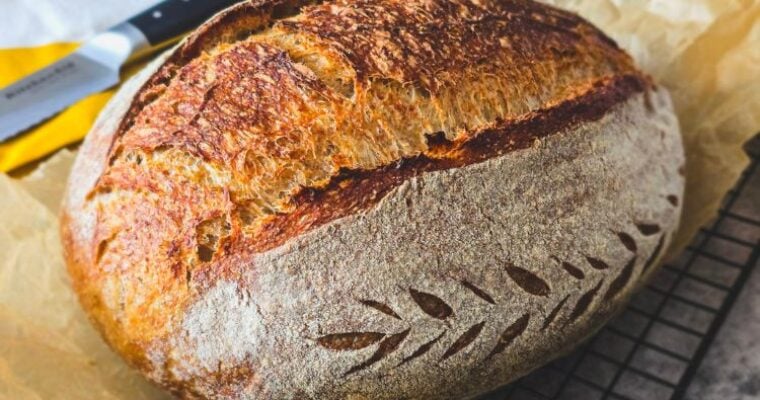
- Pale crust: Extend lid‑off time by 5–10 minutes.
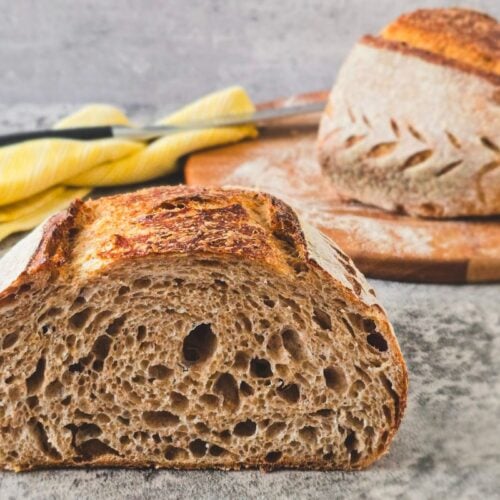
- Dense crumb: Under‑fermented bulk; next time, push bulk until more bubbly/jiggly. Use a straight wall tub to see when the dough has almost doubled.
- Sticking in banneton: Dust generously with rice flour; I also have a liner in mine or line with a clean tea towel dusted well.
Serving & storage
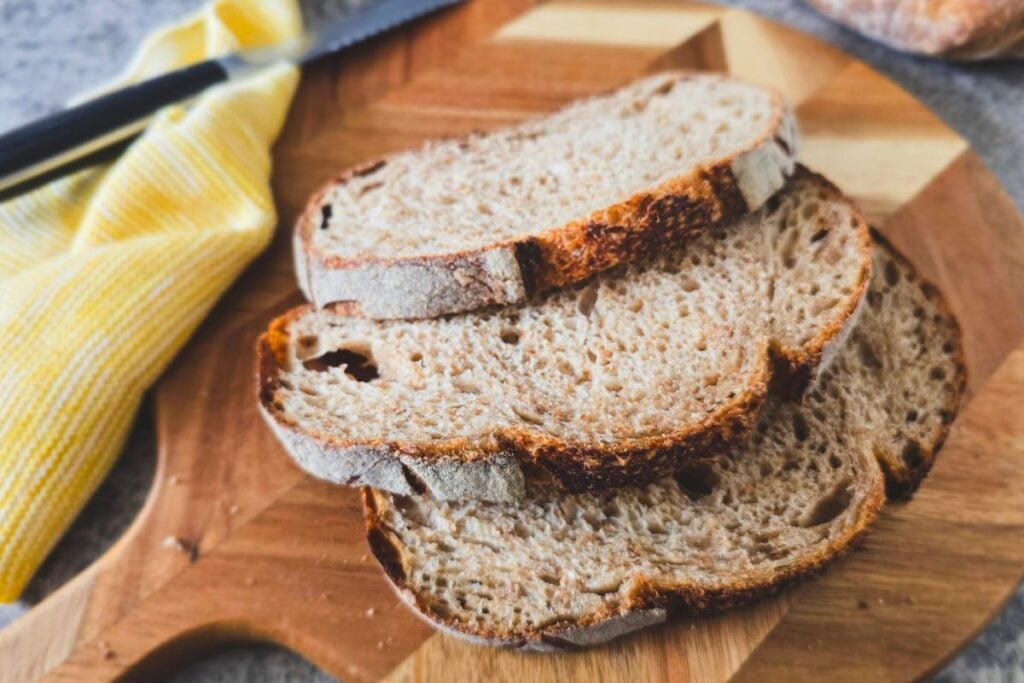
- If you can’t wait 2 hours for cooling (I will totally not judge, I’ve been there 😉), just tear pieces instead of slicing, to keep the sourdough nice and moist.
- After cooling and cutting in half you can store it in a paper bag to keep a crunchier crust. But I normally store each half in ziplock plastic bags (the crust will be soft) that I have taken air out from as much as possible then store them in a bin, away from heat or light.
- The sourdough lasts for at least 5 days, and honestly, very rarely does this bread get moldy, even if it’s kept for longer than a week (secret is to make sure is fully cooled and as airtight as possible). And if it does go stale, make some crunchy flavored croutons for this gorgeous !
- Slice + freeze in ziplock bags for easy weekday toast.
- I love at least one slice fresh or toasted for breakfast and my favorite sourdough toasts are: sourdough toast with avocado and cottage cheese, but close second is blueberry ricotta on sourdough toast.
- For a quick dinner or lunch when pizza cravings are high, I love to grab a few slices and whip up in sourdough bread pizza with everyone’s favorite toppings.
variations
- More wholemeal: Go up to 60% wholemeal (e.g., 320 g wholemeal / 215 g white), although I did go even higher wholemeal percentage (70%). Add 10–15 g water if your flour is very thirsty (meaning the dough feels a little dry).
- Seeded brown sourdough: Fold in 50 – 60 g seeds, I typically use linseed (or flaxseed) during the first set of stretch and folds. I also use millet sometimes (this is an ancient grain).
- If you want to make a boule instead of a batard, you can use the same recipe, but follow my method from this same-day sourdough bread instead.
- Use spelt flours instead, just expect a modest oven rise. Or if sourdough baking scares the living day out of you 😂, try this easy ancient grain bread made with spelt.

Four years of weekly bakes later, this brown sourdough is the loaf I reach for when I want big flavor without babysitting the dough. It’s tasty and soft rather than chewy. But the best thing: is so forgiving whether you’re doing a same‑day bake or the weekend flow. If you make it, I’d love to hear how it went: what your kitchen temp was, how long your bulk ran, and whether you tried the freezer tip. Leave a comment and a star rating below, then slice it into delicious toast or pair with soup. And if you’re newer to sourdough, peek at the FAQs and troubleshooting above – watch the dough, not the clock.
- If you make my recipe, take a snapshot for your Instagram
- Post and tag me @candyflossiecooks😉🤗!
- Don’t forget to rate my recipe! It will make my day!
recipe FAQ
Yes, you can experiment gradually, but expect a denser, tighter crumb. Increase water amount slightly and pay attention to the bulk fermentation, it may take longer.
It happens to me all the time! Bake anyway; the loaf will be tasty with slightly less oven spring.
This cold cast iron method works for me all the time, plus it’s less likely you will get a burn from your Dutch oven. The loaf steams under the lid, giving great spring and crust.
A short 20‑minute chill firms the surface so the blade glides rather than snags for cleaner scoring.
Yes, see my schedule above, although is best to have an active starter which you will have to feed the night before.
Brown sourdough bread recipe (Wholemeal + White)

Made this? A quick star rating above helps other readers find it.
Equipment
- digital scales
- large mixing bowl
- dough whisk optional, you can use a spoon
- shower cap/cover
- 1 dough scraper optional
- banneton basket
- cast iron dish or dutch oven optional, you can use a baking tray and add some ice cubes underneath for steam
- lame/razor
- oven mitts
- cooling rack
Ingredients
- 100 g active starter (100% hydration)
- 335 g water (room temp)
- 235 g strong white bread flour
- 250 g very strong whole wheat flour (brown bread flour)
- 10 g salt
- rice flour (for dusting)
Instructions
Mix (one bowl):
- Place a large bowl over your scales and tare the scale to 0g. Tare the scale before you add each ingredient, that way you can avoid miscalculating.
- Add water, starter, flours and salt to the bowl. Mix with a sturdy spoon or dough whisk until no dry spots remain. Cover with a shower cap. Rest 30 minutes.
Stretch & Folds:
- Every 20–30 minutes for about 2 hours, do a set of stretch‑and‑folds (or coil folds). Dough should feel tighter and smoother after each set. Try and complete 3-4 sets.
Bulk fermentation:
- Continue bulk at room temperature until the dough shows at least 50% rise or nearly doubles, a gentle dome, bubbles around the edges, and a light jiggle. In most kitchens the total bulk (rest + folds + rise) is around 6–8 hours; colder rooms may take longer.
Shape the dough:
- Lightly flour the bench, tip the dough out and arrange into a rough rectangle. Fold the top flap over the bottom half, then left side over two thirds to the right. Fold the right side over the left fully then roll gently from the bottom upwards to shape into a batard. Remove the flour with the scraper to help create a good surface tension while you pull the loaf gently on the bench (seam down). Flour your hands and place it seam‑up in a rice‑floured banneton (you can optionally pinch the edges in a zigzag pattern to tighten it more) ; dust the top with rice flour too. Cover and allow to proof.
Proof
- Allow the dough to rise again in the banneton either: at room temperature 1–2 h (check after an hour if warm) or fridge 8–18 h (cold proof when you have no time to wait or overnight, but it also helps a clean scoring).
Freezer (optional):
- If proofed at room temperature and ready to bake, set the banneton uncovered in the freezer for 20 minutes to help create a tighter skin for clean scoring.
Score and Bake:
- Turn the loaf onto parchment, seam‑down, and score on an angle with a sharp razor (watch the video). Set the loaf on parchment in a cold cast‑iron pot, with the lid on. Place into the oven at 220°C (428 ℉). Bake 30 minutes with lid on, then 15 minutes lid off to get a beautiful golden color on the crust.
Cool & Slice:
- Move to a rack and cool 1–2 hours before slicing so the crumb sets.
Video
Notes
- Scrunch the parchment paper to avoid it digging into the loaf. Place the loaf on the diagonal and cut away the corners by the sides (it should look like a hammock for your bread).
- Over‑proofed? Bake anyway. Expect smaller oven spring but great flavor.
- Pop in the freezer without cover for 20 minutes after rising in banneton if you want to bake the same day. It helps dry and harden the crust a bit for easier scoring.
- Work fast when you score, as your dough will tend to flatten a little.
- If you want a crustier loaf increase the amount of baking with lid on by 5 -10 minutes and then bake with lid off for 10 – 15 minutes. Ovens vary, so watch the color.
- Leave the loaf to cool on a rack for at least 2 hours before slicing. You can even cover it with a clean dry towel and leave it overnight.











breard Sourdough