If you’ve ever had a glut of cucumbers, you’ll know the urge to preserve them. In my family, fermenting wasn’t a hobby, it was a way of life. When the garden and fields overflowed with produce, everything went into jars: tomatoes (even the green ones), cabbage, cucumbers.
So here’s that beloved family recipe – simple, a little bit of spice if you like, let’s get those jars ready!
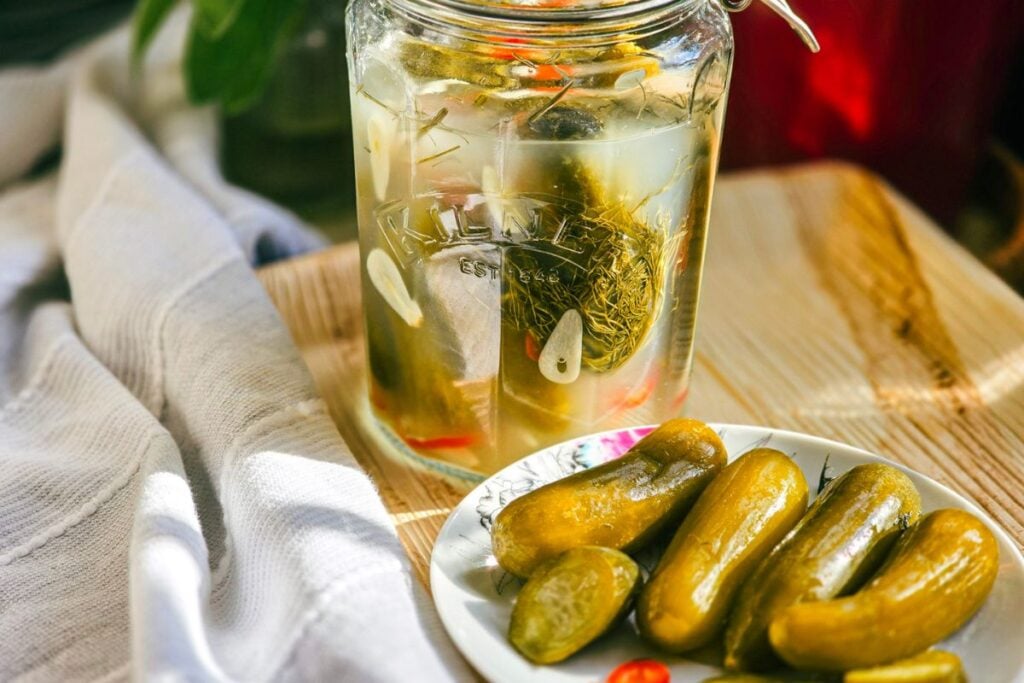
What you’ll love about this recipe
At their farmhouse, my parents have this incredible old cellar literally carved out from the ground – it’s naturally cool and dark for storing all their homemade ferments. Every summer, they’d make dozens of jars of these mini cucumbers and tuck them away down there. It was like a hidden treasure trove of crunchy, tangy goodness to see us through the winter.
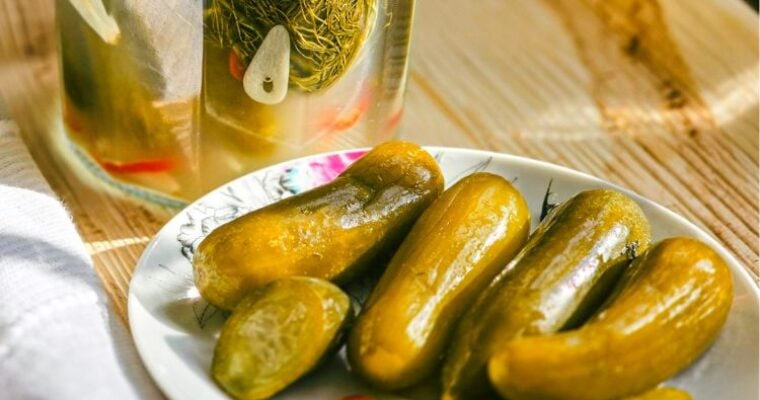
You might think that kind of preserving is absolutely unnecessary nowadays – and you’d be right. But here’s the thing: the probiotic benefits of fermented pickled cucumbers are undeniable, and the flavor? Once you’ve enjoyed a crisp, sour-salty fermented dill pickle, there’s really no comparison with shop-bought.

- Gut-Friendly Goodness: natural probiotics from lacto-fermentation.
- Deliciously Light: I am no calorie counting fanatic, but I am health conscious without compromising on taste.
- Homemade is best: Homemade naturally fermented pickles are the real deal. You know what goes in and make sure those bacteria are still live when they reach your gut. Not to mention more affordable!
- Ready when your meals are: A batch lasts in your fridge for several weeks. Toss them on nourish grain bowls, in wraps, with eggs, or on avocado with sourdough toast. They elevate everything. I mostly serve them next to evening meals or even breakfast omelettes.
- No special fermentation gear: You don’t need fancy utensils, a jar with a lid or a ceramic crock is all you need. Although, if you do get serious about fermentation, a fermentation weight will be useful.
Watch how to make Fermented pickled cucumbers

Ingredients you’ll need
- Cucumbers – use mini cucumbers, preferably organic ones that are firm, with no blemishes.
- Garlic – peeled and sliced thickly.
- Chili – I used a mild chili, sliced in rounds. Depending on how hot your choice of chili is, you might want to hold some back🌶️🥵!
- Fresh dill – my parents are growing dill and they always add 2–3 florets of dill flowers which takes their gherkins to the next level (mouthwatering as I type 🤤).
- Water and salt (the secret to natural lacto-fermentation) – the simplest brine ever that helps the good bacteria grow and ferments your veggies. And the salt keeps the bad bacteria from growing, protects the vitamins in the veg and keeps your veggies crunchy!

How to Make Fermented Pickled Cucumbers (Step-by-Step)
Time needed: 7 days
A step-by-step guide to making small-batch fermented cucumbers (also called lacto-fermented gherkins or fermented dill pickles) at home. These crunchy mini cucumbers ferment in a week and will last for ages in the fridge – if you can resist them 😉!
- Clean and trim the cucumbers
Rinse the mini cucumbers under cold water and slice off the stem ends (this helps to keep them crunchy). If you find small blemishes, you can also slice them off.
- Make the brine
Dissolve the salt in the water to make a brine. You may have more brine then you need, but that’s okay.

- Prepare the garlic, herbs and spices
Peel the garlic, slice each clove in thick slices and set aside. Give the dill a quick rinse under the cold water tap. Slice the chili if adding.
- Pack the jar
In a jar (approximately 1 liter capacity) add dill, a few garlic slices, then start stuffing with the cucumbers by packing them vertically as much as you can. Don’t force them too much, but press gently to pack them tight enough so they don’t float above the brine. Add more garlic, dill, and chili slices midway through filling and in any gaps. The cucumbers should be wedged just under the jar neck. If you have a fermentation weight you can place it on top (can also use a ramekin, or zip-lock bag filled with water).
- Pour the brine and let the fermentation begin!
Using a funnel if you have one, cover the cucumbers completely with the saltwater brine. Pop a lid on and set on the counter at room temperature, but not too close to any heat sources or sunlight. Put the jar on a tray or plate, because some of the brine may leak during fermentation. If using a ceramic crock, just fill the brine to the top and add the lid.
- Burp daily 🫧
After 2-3 days (depending on how warm your kitchen is, you will notice the brine in the jar getting slightly cloudy.
Every day for the next week, use a clean straw to gently blow into the jar to release gases formed by the friendly bacteria. You may notice the cucumbers rising up, just push them down gently (my mum wedges a few fresh peeled horseradish batons to keep them down). With a clean spoon taste the brine daily from day 3 onward to see how sour you like it. - Store fermented pickled cucumbers in the fridge
After a week, your fermented cucumbers are ready! Give them a taste to make sure you like how tangy they taste, because if you want them more sour you can extend the fermentation for a few more days. When they taste tangy, sour, and still crisp, they’re ready.
They will keep in the fridge for at least 3 weeks. Don’t worry if there is a slight sediment settled at the bottom of the jar, it’s normal.


Pro Tips and variations
- Make sure all the utensils and recipients you use are clean.
- Trim off the stem and blossom ends before fermenting. The blossom end in particular has enzymes that can soften cucumbers over time. A quick trim helps keep your fermented pickled cucumbers crisp and lets the brine soak in evenly.
- It’s a good idea to remove the seal from the lid, so that gas can escape during fermentation.
- When you burp the brine, make sure you push the cucumbers down gently, so the liquid is covering them fully. If you have a fermentation weight, it will be useful to keep things submerged.
- You can add other spices like allspice berries or dill seeds.
Preparation time
It takes around 10 minutes to prepare the vegetables, herbs and spices.
Then another 5 minutes to prepare the brine. I am being generous here, because I know myself (not always super organised 😉).
Fermenting time
The fermentation takes around a week, but it will still continue very slowly in the fridge. I noticed that the cucumbers tend to get sour even after 3 days, they will be a little squishy, but still keeping a crunch.
Total time
This means that in one week you can have a healthy nourishing pickle to add to any meals, I often have them for breakfast 😉.
Servings
This recipe uses around a 400-500 g (around 1lb) of cucumbers and should be enough for at least 10 servings (unless you devour them straight from the jar in one sitting 🫣).
Nutritional goodness
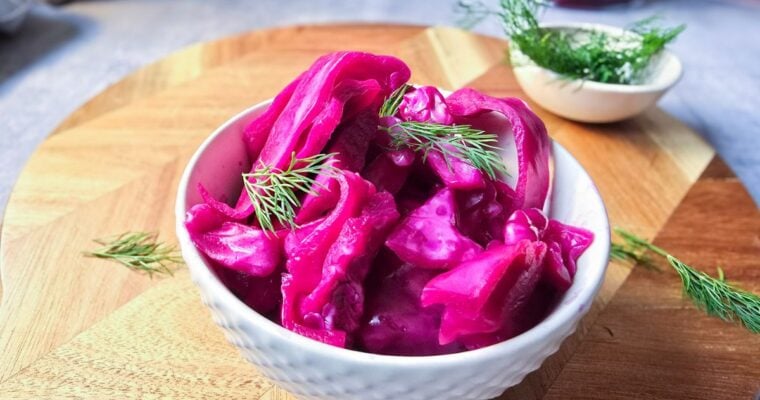
If you tried my fermented cauliflower, fermented radishes or my pink sauerkraut, you already know that I have a thing for lacto fermented vegetables. Because our gut and well-being are so interconnected, and more research is highlighting the benefits of gut-health to our overall health. This plant-based dish counts towards the 30 plants a week , not to mention all the good lactic acid bacteria (LAB)!

What to pair fermented pickled cucumbers with
- I cram quite a few types of vegetables early in my day, you will often find crunchy sweet peppers next to my eggs and toast or any natural pickles I have in the fridge at that point. Don’t be surprised that I have fermented mini cucumbers with my Moroccan Shakshuka for breakfast.
- Layer a few slices in my buttermilk chicken burger, or tuck into smash burger tacos or wraps and sandwiches.
- And I always add them in my boeuf salad or when I host parties, they are essential if you need small charcuterie board ideas.
- I use the liquid as a vinegar replacement to liven up salad dressings or soups!
- Sneak them in lunch boxes, they will turn a boring chicken or pasta salad into a “trendy cafe for lunch”!

Here’s the truth: probiotics work best like a gym membership – consistency beats occasional drop-ins. A daily crunch of fermented cucumbers keeps your gut bugs well-fed and happy. I’d love for you to make a batch, get into the habit, and see how easy it is to build probiotics into your everyday routine.
- If you are just getting started with fermented vegetables, this recipe is an easy one!
- If you make my recipe, take a snapshot for your Instagram and maybe a little video so I can hear that crunch!
- Post and tag me @candyflossiecooks😉🤗!
- Don’t forget to rate my recipe! It will make my day!
recipe FAQ
No. Vinegar pickles taste sharp straight away. Lacto fermented gherkins sour naturally through fermentation, giving complex flavor and probiotics.
At least 3 weeks in the fridge, but they never make it that long in our house 😄.
This is normal. That’s a sign of good bacteria at work. As long as it smells pleasantly sour and not rotten, you’re fine.
Mold grows where air meets liquid. Remove it carefully and keep cucumbers submerged. If the brine gets moldy or the cucumbers get mushy and smelly, start another batch, it happens 😞.
Absolutely not! That brine is so tasty and teaming with good bacteria. You can even have a little sip or use it to make a vinaigrette, I know I do 🤩!

Fermented Pickled Cucumbers Recipe

Made this? A quick star rating above helps other readers find it.
Equipment
- 1 jar approximately 1 liter (approx. 1 quart) capacity, with lid
- 1 funnel optional
- 1 measuring jug
- 1 scale to weigh the salt
Ingredients
- 500 g cucumbers small and as straight as possible
- 1 liter water
- 25 g salt fine sea salt, preferably non-iodized
- 3 garlic cloves sliced thickly
- 20 g dill
- 1 medium red chili sliced
- 1 tsp allspice berries optional
Instructions
Clean & trim the cucumbers
- Rinse cucumbers thoroughly in cold water and trim off the stem and blossom ends.
Make the brine
- Dissolve the salt (25g per liter of water) in the water to make a brine. You may have some brine left after filling the jar.
Prepare the garlic, herbs and spices
- Peel the garlic, slice each clove in thick slices and set aside. Give the dill a quick rinse under the cold water tap. Slice the chili if adding. Measure the spices if adding.
Stuff the jar
- In a jar (approximately 1 liter capacity) add dill, a few garlic slices, then start packing the cucumbers vertically. Don’t force them too much, but press gently to pack them tight enough so they don’t float above the brine.
- Add more garlic, dill, and chili slices midway through filling and in any gaps.
- The cucumbers should be wedged just under the jar neck. If you have a fermentation weight you can place it on top (or a ramekin or a clean ziplock bag filled with water).
Pour the brine and let the fermentation begin!
- Add the brine over the cucumbers until everything is fully submerged.
- Cover with a lid and set on the counter at room temperature, but not too close to any heat sources or sunlight. Put the jar on a tray or plate, because some of the brine may leak during fermentation.
Burp daily 🫧
- After 2-3 days (depending on how warm your kitchen is, you will notice the brine in the jar getting slightly cloudy.
- Every day for the next week, use a clean straw to gently blow into the jar to release gases formed by the friendly bacteria. You may notice the cucumbers tend to rise up, just push them down gently.
Store the fermented cucumbers in the fridge
- With a clean spoon taste the brine daily from day 3 onward to see how sour you like it. When tangy and still crunchy, transfer to the fridge. If you want them more sour you can extend the fermentation for a few more days.
Video