Dave isn’t a bread person the way I am. He won’t talk crumb structure with me, he doesn’t care what my starter is called, and he has never once asked how long something’s been bulk fermenting. But has no problem demanding a few toasted slices of this blueberry sourdough with butter as a snack, at pretty much any hour. He’s shared it with his team at work more than once now, and it’s gotten to the point where a whole loaf is expected. Explaining that a boule like this takes most of a day doesn’t change that expectation in the slightest. So here we are.
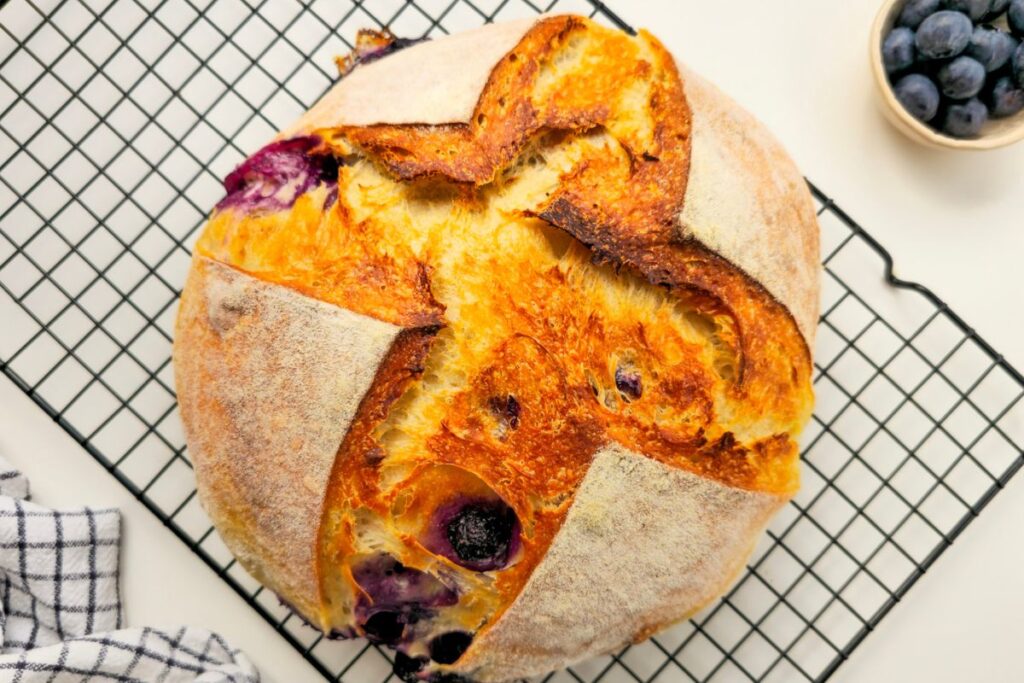
This is my blueberry sourdough boule with a tangzhong worked into the dough, which is very much worth the small effort it takes. Tangzhong is a pre-cooked flour and milk paste that gets mixed into the dough and it helps hold onto moisture through the bake. You get a loaf that’s still soft on day two and three, not just when fresh out of the oven.
What you’ll love about this recipe
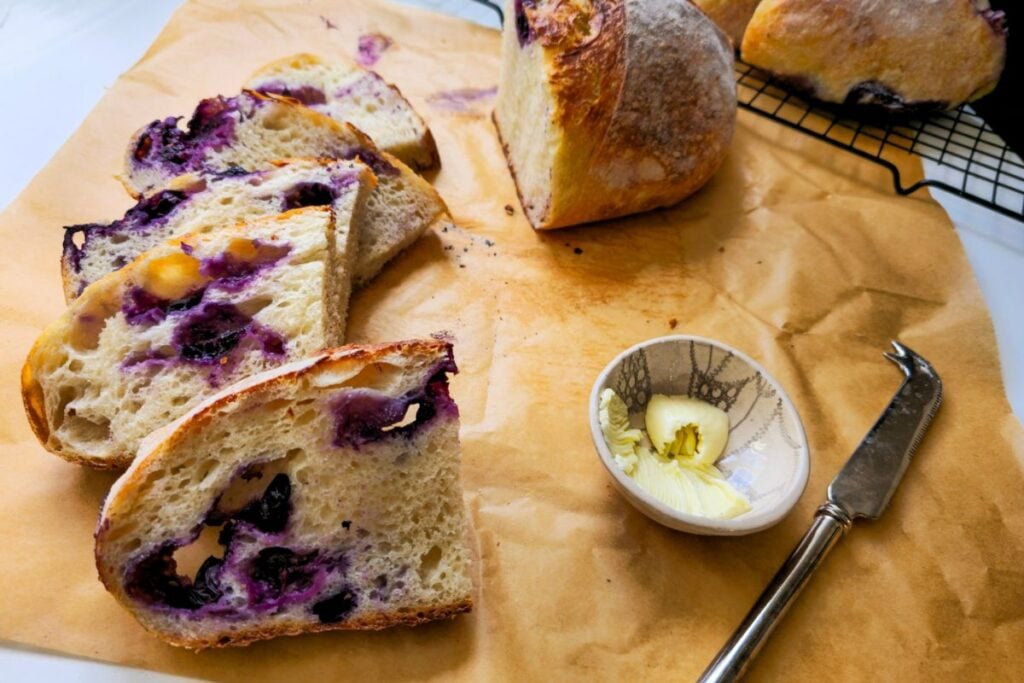
- The tangzhong keeps it soft for days, not hours. Most sourdough starts firming up by the next morning. This one doesn’t, which is the reason Dave can request a snack slice two days after baking and still get something buttery.
- It’s a proper sourdough. This boule keeps the crust and open crumb of a Dutch oven bake, a slight tang, while still getting that softness of a sandwich tin loaf.
- Tested well past the point of reasonable doubt. I’ve made this with strong white bread flour succesfully, and once, when I’d run out, with pizza flour. It still worked.
- It freezes and slices beautifully. More on that below, but if you like fresh toast without baking every few days, this loaf is built for that.
Watch me make it

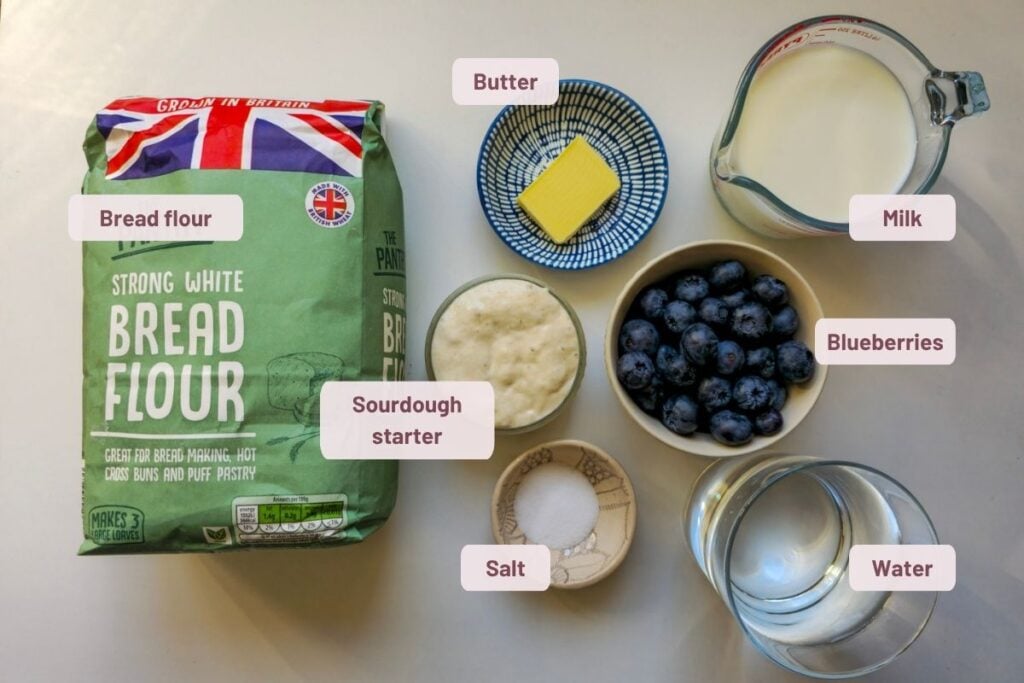
Ingredients you’ll need
You need two things sorted before you start: a bubbly, active sourdough starter, and a bit of patience for the tangzhong to cool.
For the tangzhong:
- 50g strong white bread flour
- 200g milk (semi-skimmed works, but any milk, or even water, does the job)
For the dough:
- 150g water
- 100g active starter
- 450g strong white bread flour
- 10g salt
- 1 tablespoon melted butter (optional)
- 150g fresh blueberries
- rice flour, liberally for dusting the banneton
Swaps and additions:
- No bread flour in the cupboard? This has been tested successfully with pizza flour. It won’t be identical, but it works.
- Want a lemon-blueberry version? Add the zest of one lemon to the dough when you mix in the flour.
- I haven’t tried making it with frozen blueberries, but if you do, be sure to thaw them and drain them before adding to your dough.
How to make blueberry sourdough bread
Make the tangzhong
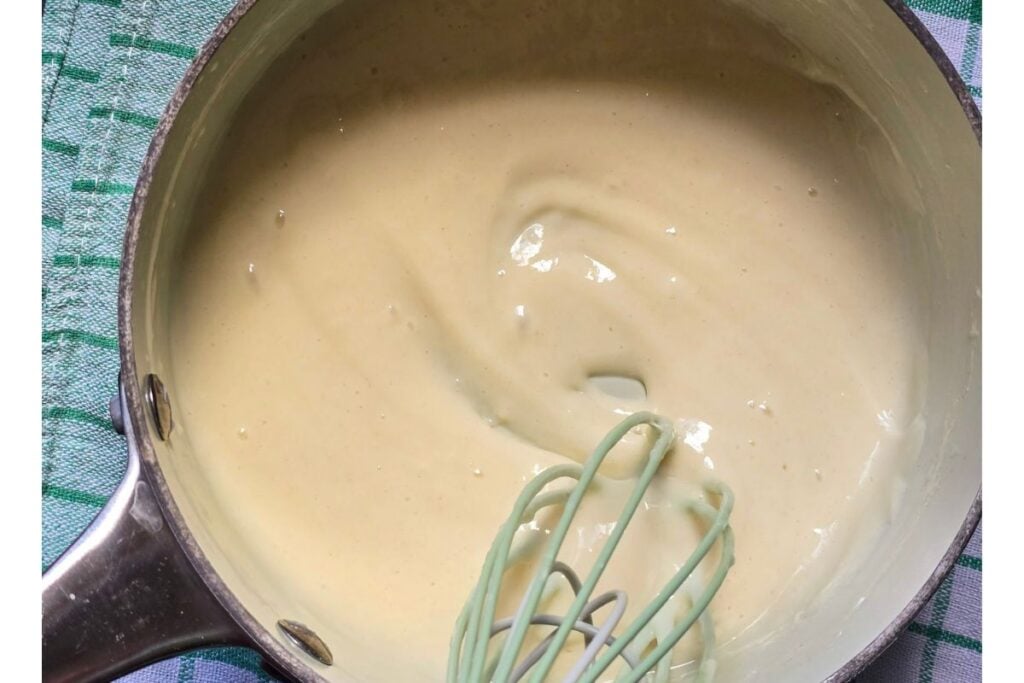
Whisk the flour and milk together in a small saucepan. Cook over gentle heat, whisking constantly, until it thickens to about the consistency of plain yogurt. This takes a few minutes and happens faster than you’d expect, so don’t step away. Take it off the heat, tip it into a bowl, and let it cool to room temperature before it goes anywhere near your dough. Whisk it every few minutes to stop it from forming a skin.
Mix the dough
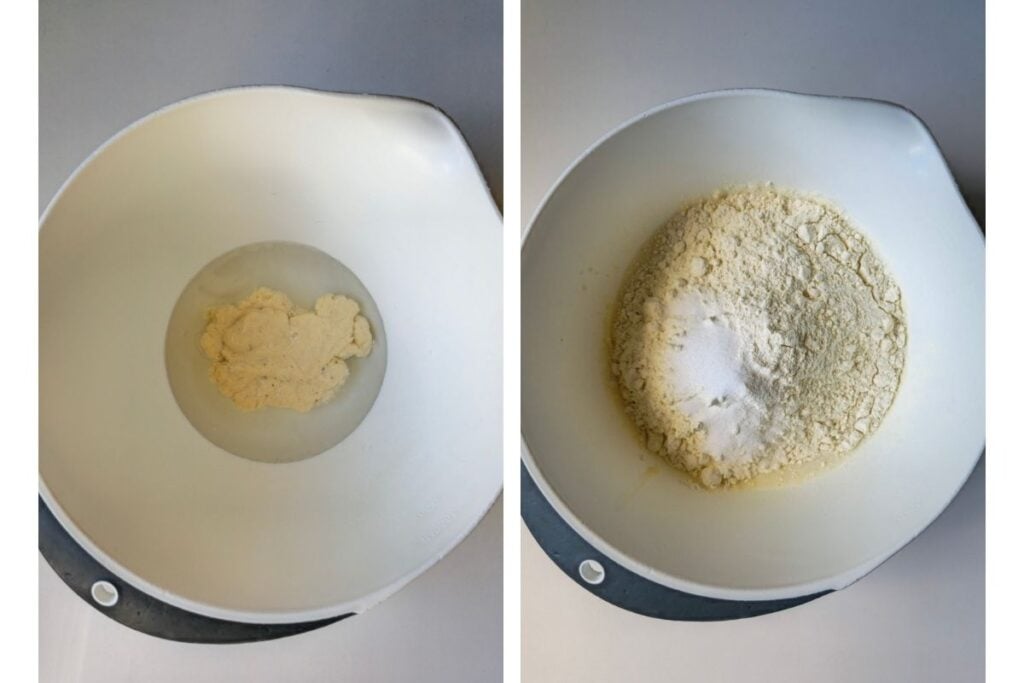
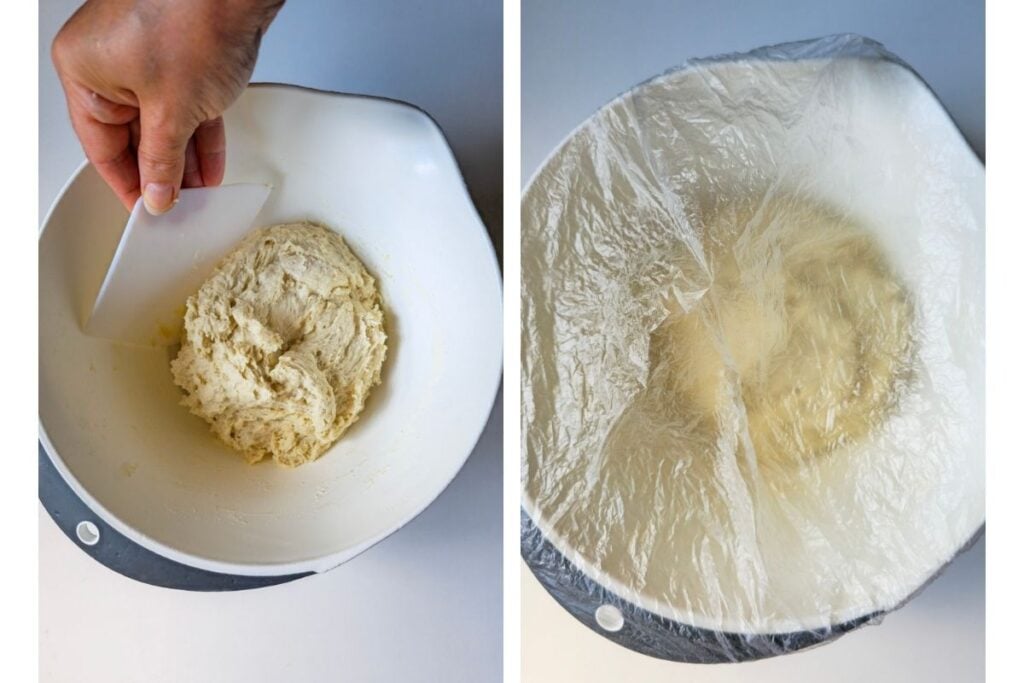
In a large bowl, combine the water, active starter, then add the cooled melted butter if using, and the cooled tangzhong. Add the flour and salt and mix well by hand until there’s no dry flour left and you’ve got a shaggy dough. You want to develop gluten at the start so you can take the dough on the counter and knead it, or even knead it for 5 minutes in a mixer with a dough hook to get a fairly smooth, cohesive dough.
Bulk ferment and fold
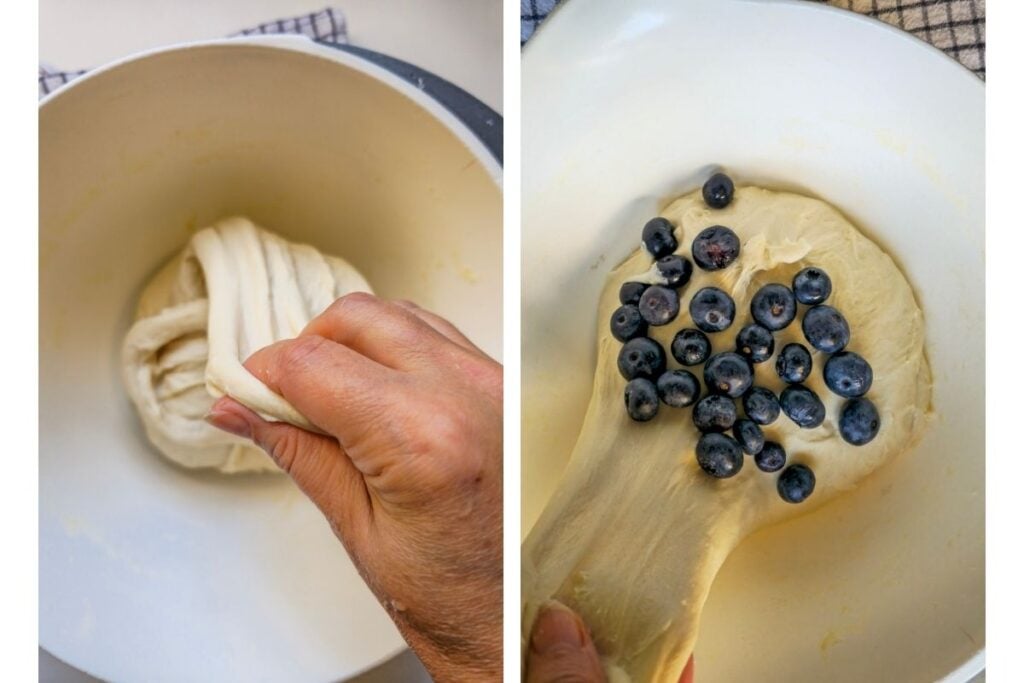
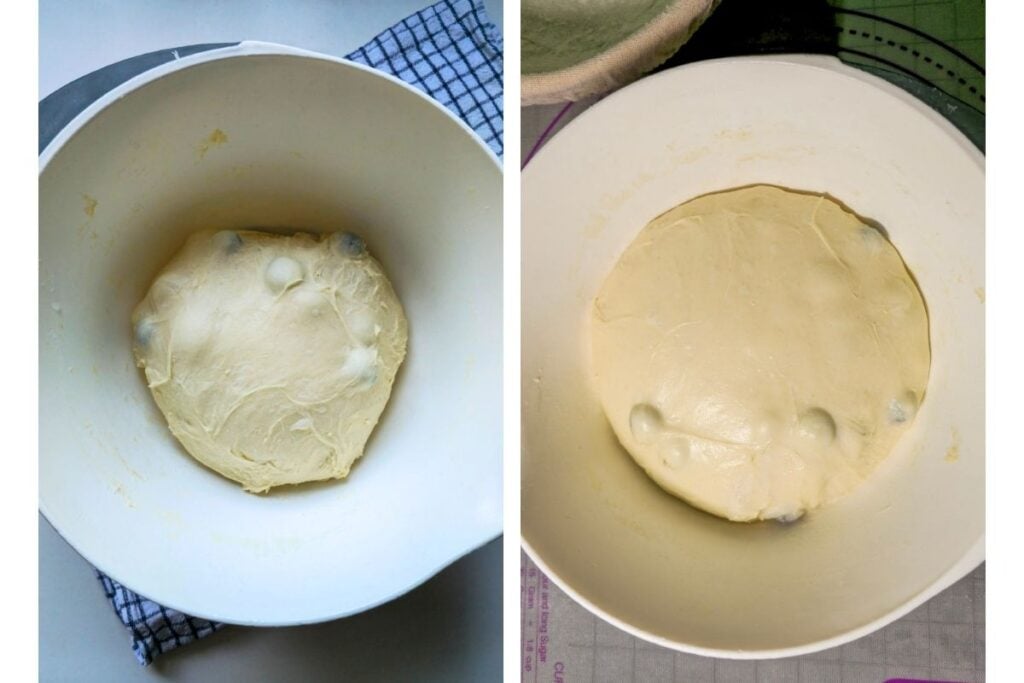
Over the next two hours, do four sets of stretch and folds, one every 30 minutes. Fold the blueberries in gently during the second or third set, so they don’t get crushed too early. After the fourth fold, leave the dough alone and let it continue fermenting for a total of about 5 hours from when you first mixed it. This recipe was tested in a warm summer kitchen, so in a cooler room it can easily take longer. Go by the dough, not the clock: you’re looking for at least 30% more volume before you move on to shaping.
Preshape and shape
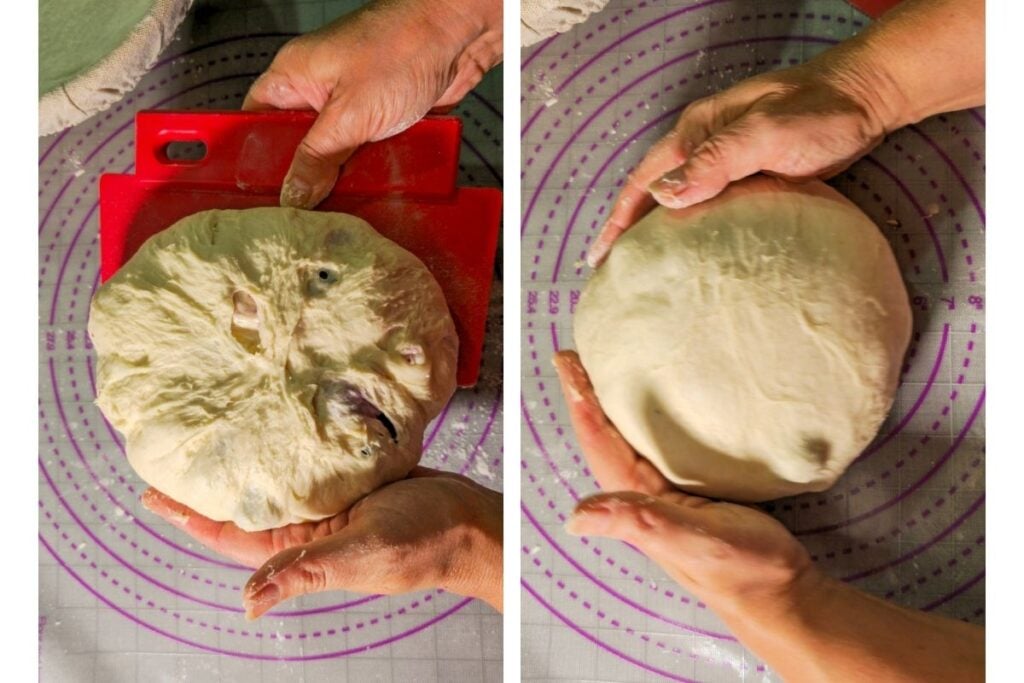
Turn the dough out onto a lightly floured counter and shape it into a loose round gathering pieces of dough to the middle. Let it rest, covered loosely with a clean tea towel, for 10 minutes. Then shape it into a tighter boule (pulling gently towards you with your hands or a dough scrapper).
Proof
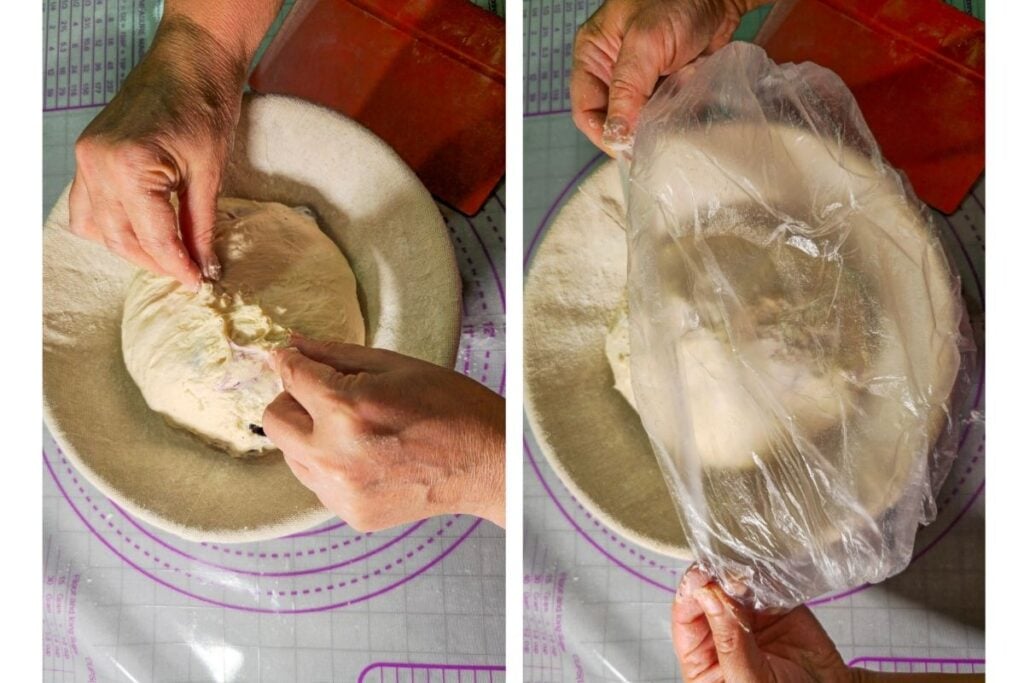
Place it seam-side up in a banneton floured with rice flour, stitching it so it seals tight. Dust with a little rice flour again, cover and leave at room temperature for 2 hours, or move it to the fridge overnight for a cold retard. Cold dough is firmer and easier to score cleanly, but I prefer to proof mine at room temperature if I have time and while the oven is preheating, I pop the banetton uncovered in the freezer for 20 minutes so it scores with less snagging.
Bake
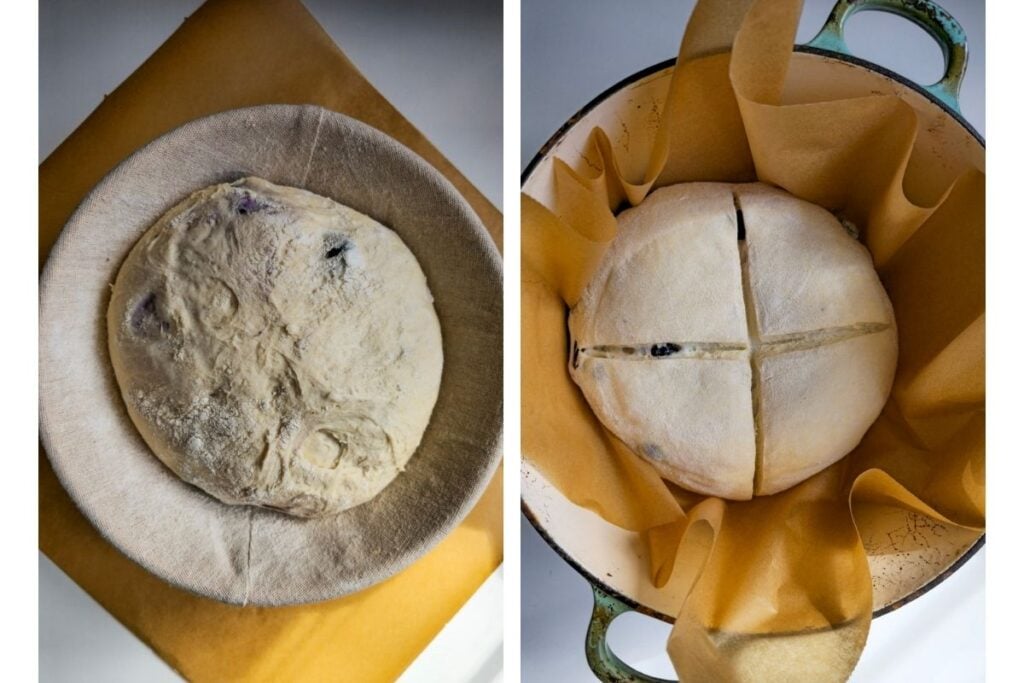
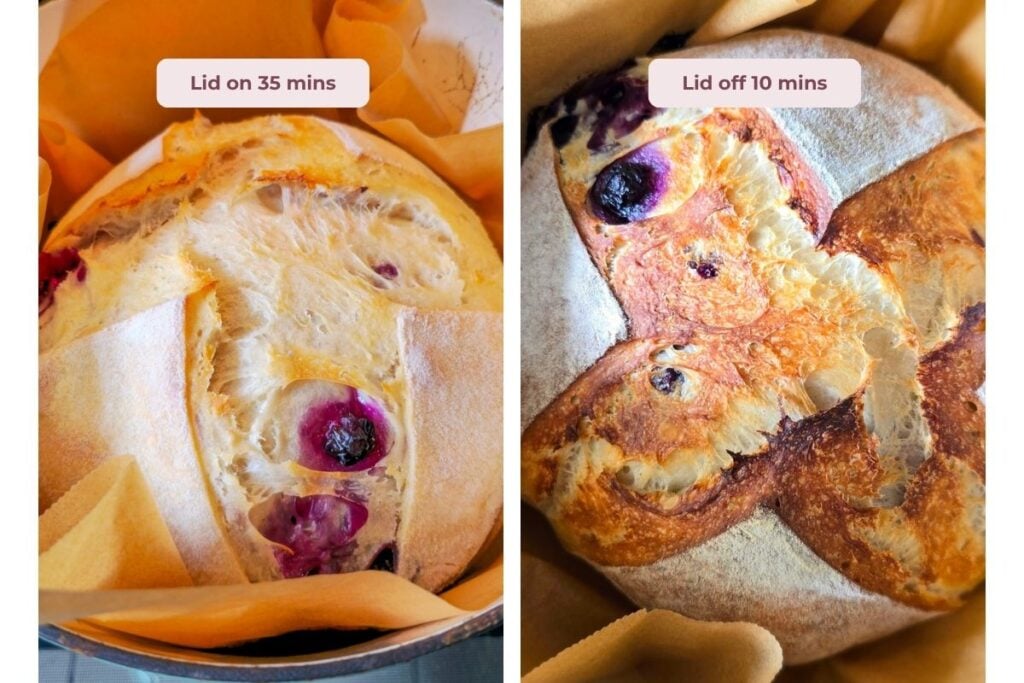
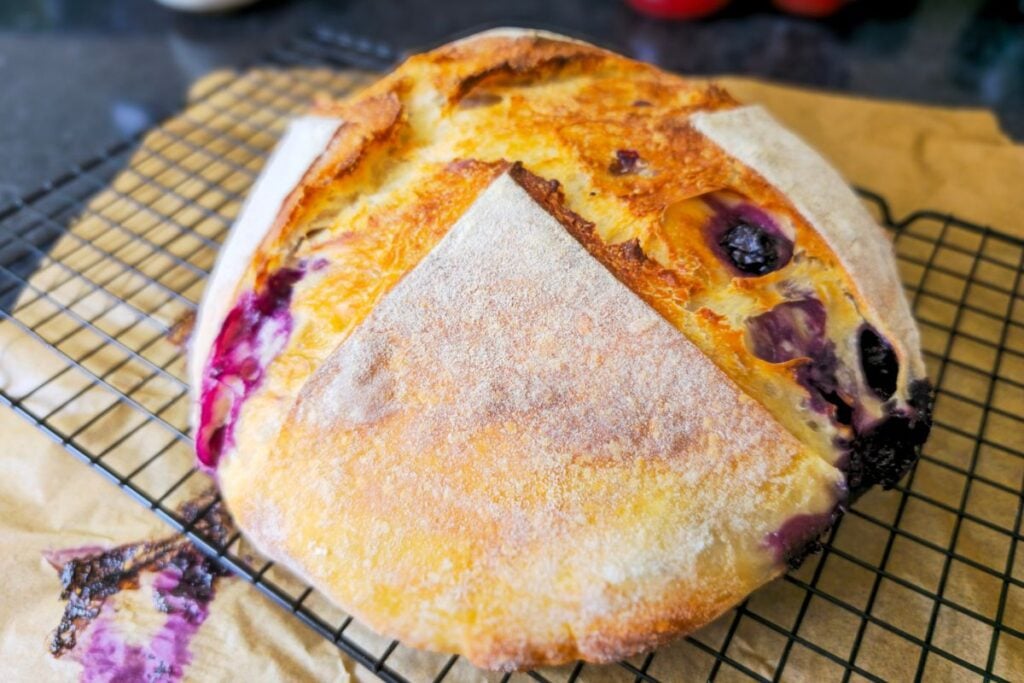
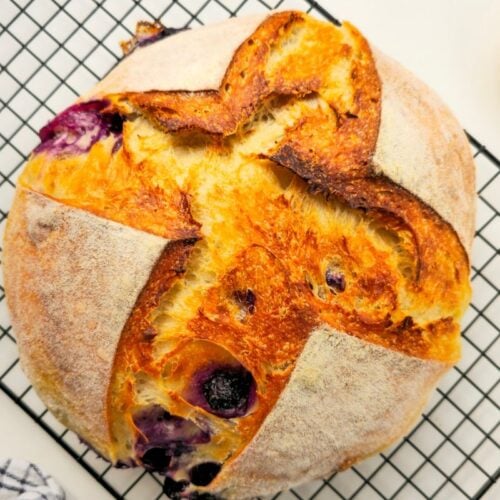
Preheat your oven to 225°C (437°F). Turn the dough out onto a piece of parchment, be brave and score a deep-ish cross across the top, and lower it into a Dutch oven (no need to preheat the pot itself, but absolutely fine if you do for 10 minutes or so). Put the lid on and place the whole thing into the hot oven. Bake for 35 minutes with the lid on, then remove the lid and bake for a further 10 minutes until it turns golden brown.
Cool
Take it out onto a rack and let it cool completely before slicing. The crumb is still setting as it cools, and a warm loaf will squash and gum up under a knife. If you cannot wait, tear off a piece instead of slicing it.
Pro Tips
- Watch the dough, not the clock. The 5-hour bulk ferment is a guide from my warm kitchen. If your kitchen runs cooler, particularly outside of summer, give it more time and check for volume rather than watching the timer.
- 20 minute freezer hack. I prefer to proof mine at room temperature and while the oven is preheating, I pop the banetton uncovered in the freezer for 20 minutes so it scores with less snagging.
- Slice and freeze for fresh toast on demand. Once the loaf is fully cool, I slice the whole thing on an electric slicer and freeze the slices in wax bags. Toast goes straight from freezer to toaster whenever it’s wanted, and it comes out just as good as day one.
Preparation time
About 30 minutes of active time, spread across making the tangzhong, mixing, and the stretch and folds.
cooking time
45 minutes (35 minutes with the lid on, 10 minutes with it off).
Bulk fermentation
About 5 hours, longer in a cooler kitchen. This was tested in a warm summer kitchen, so go by the dough rather than the clock.
Total time
Over 8 hours, plus time to cool completely before slicing.
Nutritional benefits
Sourdough fermentation breaks down some of the flour’s starches and gluten before the loaf even goes in the oven, and freezing the baked bread increases its resistant starch content further. The starch in bread behaves more like fibre after it’s been cooled and frozen, it becomes more resistant to digestion, a process called retrogradation. And that’s the nerdy bit of food science out of the way, not a reason to eat more toast.
Servings
This recipe yields about 16 slices from one boule, enough to share.
What to serve it with
- Thick slices with salted butter, which is the only way Dave will eat it
- I love it toasted, with a slick of almond or peanut butter and a smushed date for sweetness, but banana slices would pair so well too
- Alongside a bowl of soup for dunking
Variations and substitutions
- Add the zest of one lemon to the dough for a lemon-blueberry version
- Swap the blueberries for raspberries or blackberries at the same weight
- Prefer a levain to starter straight from the jar? Build one with 35g starter, 35g flour, and 35g water about 4 hours before mixing the dough, and use it in place of the 100g active starter
- Only have frozen blueberries? Add them straight from the freezer rather than thawed, and expect a little more color bleeding into the dough
- More blueberry breakfast-y things to try: lemon ricotta sourdough pancakes with blueberries, blueberry ricotta toast, or simply dollop cottage cheese for more protein like in this avocado cottage cheese toast.
- For a richer, buttery loaf, try my sourdough brioche bread. It’s shaped into eight balls and baked in a loaf tin.
Dave will tell you this is worth the wait, and he’s not exactly an unbiased judge of bread in general, but on this one I think he’s right. If you make it, I’d love to know how your starter got on, especially if your kitchen runs on the cooler side. Let me know in the comments.
recipe FAQ
No. Strong white bread flour gives the best structure and rise, but this has been tested with pizza flour when that’s what was in the cupboard, and it still turned out well.
You can, and you’ll still get a good loaf. Just add the same amounts of flour and liquid to the dough mixing stage instead. It may not keep as soft for longer though.
This recipe was tested with fresh. Frozen will work in a pinch, but add them straight from the freezer rather than thawed, and expect a bit more color bleeding into the dough.
Probably nothing. Kitchen temperature makes a bigger difference to bulk fermentation than almost anything else, and this was tested in summer. Give it more time in a cooler kitchen rather than moving on by the clock.
Yes. Build a levain using 35g starter, 35g flour, and 35g water, about 4 hours before you want to mix your dough, and use the full amount in place of the 100g active starter.
Blueberry Sourdough Bread

Made this? A quick star rating above helps other readers find it.
Equipment
- kitchen scale
- Small saucepan (for the tangzhong)
- whisk
- Large mixing bowl and plastic cover (I use a new shower cap)
- Dough scraper (optional, for shaping)
- Banneton or proofing basket
- Bread lame or sharp razor blade (for scoring)
- Dutch oven
- Parchment paper
- Wire cooling rack
- Electric slicer (optional, for slicing and freezing)
Ingredients
For the tangzhong:
- 50 g strong white bread flour
- 200 g milk
For the dough:
- 150 g water
- 100 g active sourdough starter
- 450 g strong white bread flour
- 10 g salt
- 1 tablespoon melted butter optional
- 150 g fresh blueberries
Instructions
Make the Tangzhong
- Whisk the flour and milk together in a small saucepan. Cook over gentle heat, whisking constantly, until it thickens to about the consistency of plain yogurt. This happens faster than you’d expect, so don’t step away.50 g strong white bread flour, 200 g milk
- Take it off the heat, tip it into a bowl, and let it cool to room temperature before it goes anywhere near your dough. Whisk it every few minutes to stop it from forming a skin.
Mix the Dough
- In a large bowl, combine the water and active starter, then add the cooled melted butter (if using), and the cooled tangzhong. Add the flour and salt and mix well by hand until there's no dry flour left and you've got a shaggy dough.150 g water, 100 g active sourdough starter, 450 g strong white bread flour, 10 g salt, 1 tablespoon melted butter
- You want to develop gluten at the start, so knead the dough on the counter, or for 5 minutes in a mixer with a dough hook to get a fairly smooth, cohesive dough.
Bulk Ferment and Fold
- Over the next 2 hours, do 4 sets of stretch and folds, one every 30 minutes. Fold the blueberries in gently during the second or third set so they don’t get crushed too early.150 g fresh blueberries
- After the fourth fold, leave the dough to continue fermenting for a total of about 5 hours from when you first mixed it (longer in a cooler kitchen). Go by the dough, not the clock: you're looking for at least 30% more volume before shaping.
Preshape and Shape
- Turn the dough out onto a lightly floured counter and shape into a loose round gathering pieces of dough to the middle. Let it rest, covered loosely with a tea towel, for 10 minutes.
- Shape into a tighter boule, pulling gently toward you with your hands or a dough scraper.
- Place it seam-side up in a banneton floured with rice flour, stitching it so it seals tight. Dust a little more rice flour so it doesn't stick to the plastic cover.
Proof
- Cover and leave at room temperature for 2 hours, or move to the fridge overnight for a cold retard. Cold dough is firmer and easier to score cleanly.
- If proofing at room temperature, pop the banneton uncovered into the freezer for 20 minutes while the oven preheats, so it scores with less snagging.
Bake
- Preheat your oven to 225°C (437°F). Turn the dough out onto a piece of parchment and score a deep-ish cross across the top.
- Lower it into a Dutch oven (no need to preheat the pot itself, but fine to if you do, for about 10 minutes). Put the lid on and place it in the hot oven.
- Bake for 35 minutes with the lid on, then remove the lid and bake for a further 10 minutes, until deep golden brown.
Cool
- Take it out onto a rack and let it cool completely before slicing. The crumb is still setting as it cools, and a warm loaf will squash under a knife. Tear off a piece instead of slicing if you can't wait.
Video