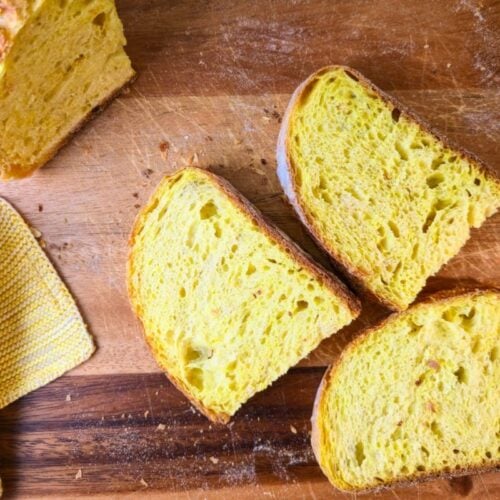
I love bulking up curries and stews with roast pumpkin in the fall, so there’s nearly always a tub of roasted pumpkin flesh in my fridge at this time of year. Some of it now goes into this sourdough pumpkin bread. The puree is mixed right into the dough, with a little turmeric to deepen the color (a small cheat, I’ll admit), so the crumb bakes up golden and the loaf isn’t sweet. It’s built the same way as my other boules, an active starter, a long bulk ferment and a Dutch oven bake, with one change: I’ve gone all in on slap and folds. You get to feel the dough change in your hands from one set to the next, which I find much easier to read than stretching it in a bowl.
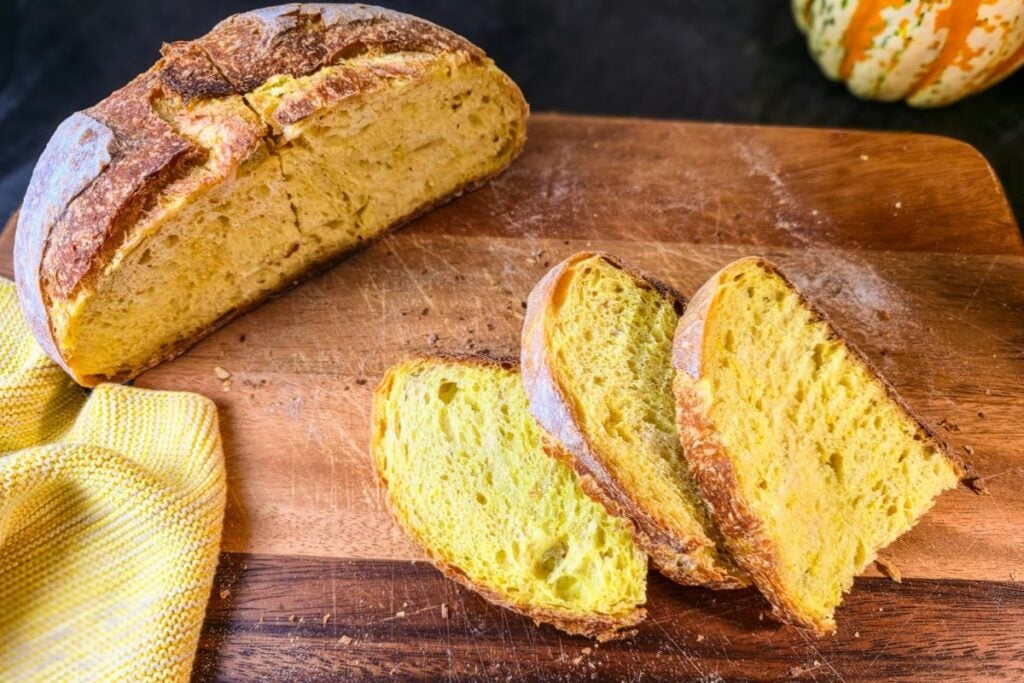
It takes most of a day, but nearly all of that is the dough sitting on the counter. Your hands are busy for about half an hour.
What you’ll love about this recipe
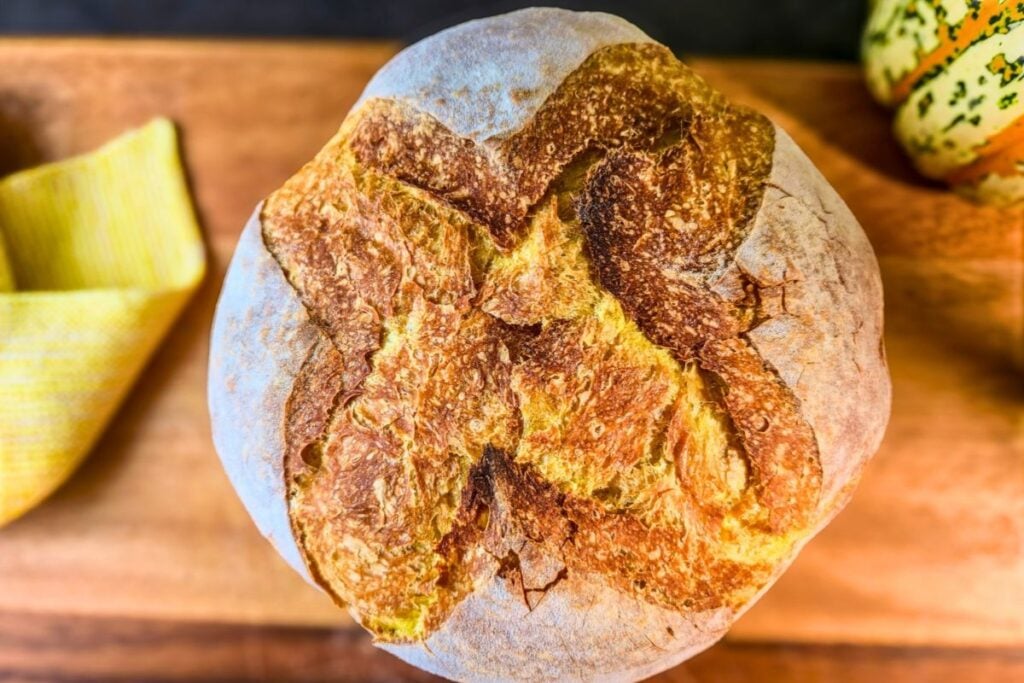
- A golden crumb from real pumpkin. The puree goes into the dough, not on top, and half a teaspoon of turmeric deepens the color.
- It isn’t sweet. There’s only an optional teaspoon of honey, so it works for savory breakfasts, sandwiches and soup.
- Slap and folds give you control. Building gluten early on the bench means a smoother dough that’s easier to shape.
- A same-day bake or an overnight proof. Bake it the same evening, or let the shaped loaf proof in the fridge overnight.
- Canned or homemade pumpkin both work. Roast your own or open a can of plain puree.
Ingredients you’ll need
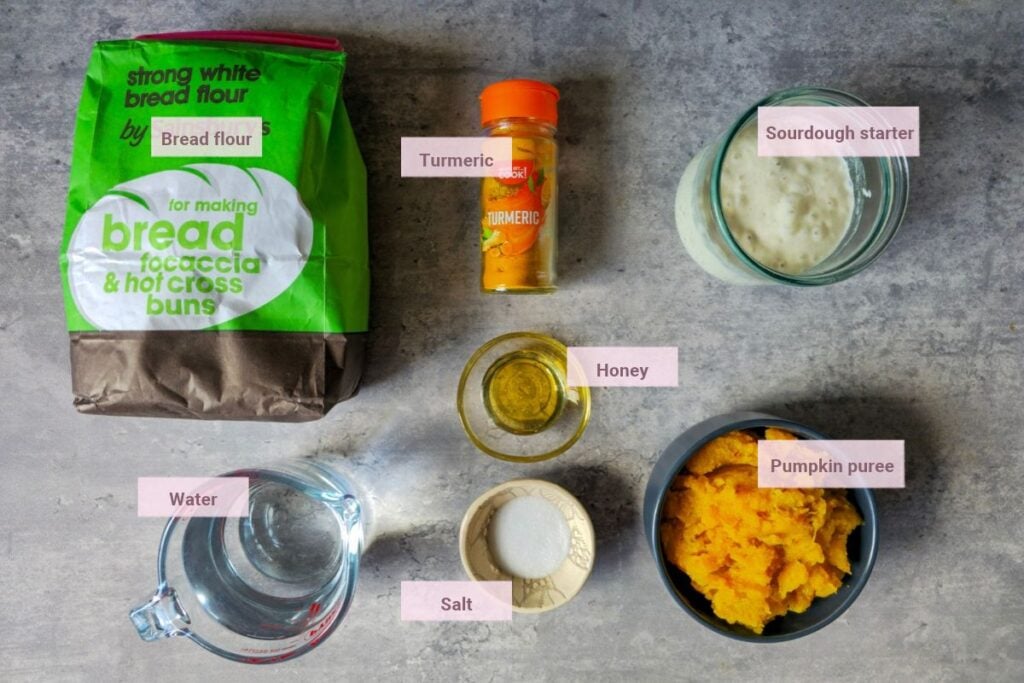
Seven ingredients, plus rice flour for the banneton. The two that matter most are an active starter and plain pumpkin puree.
- Water
- Active sourdough starter (100% hydration)
- Pumpkin puree
- Honey (optional)
- Strong white bread flour
- Salt
- Ground turmeric (optional, for color)
- Rice flour, for dusting the banneton
Starter: Use it active and at its peak. If you’d rather build a levain, mix 35g starter, 35g flour and 35g water about 4 hours before you start and use it in place of the 100g active starter. I use the same method in my blueberry sourdough bread.
Pumpkin puree: Plain canned pumpkin puree works, or roast your own pumpkin and mash or blend it. Avoid pumpkin pie filling, which has sugar and spices already in it. The pumpkin brings its own moisture, so don’t feel tempted to add more water.
How to roast pumpkin for bread
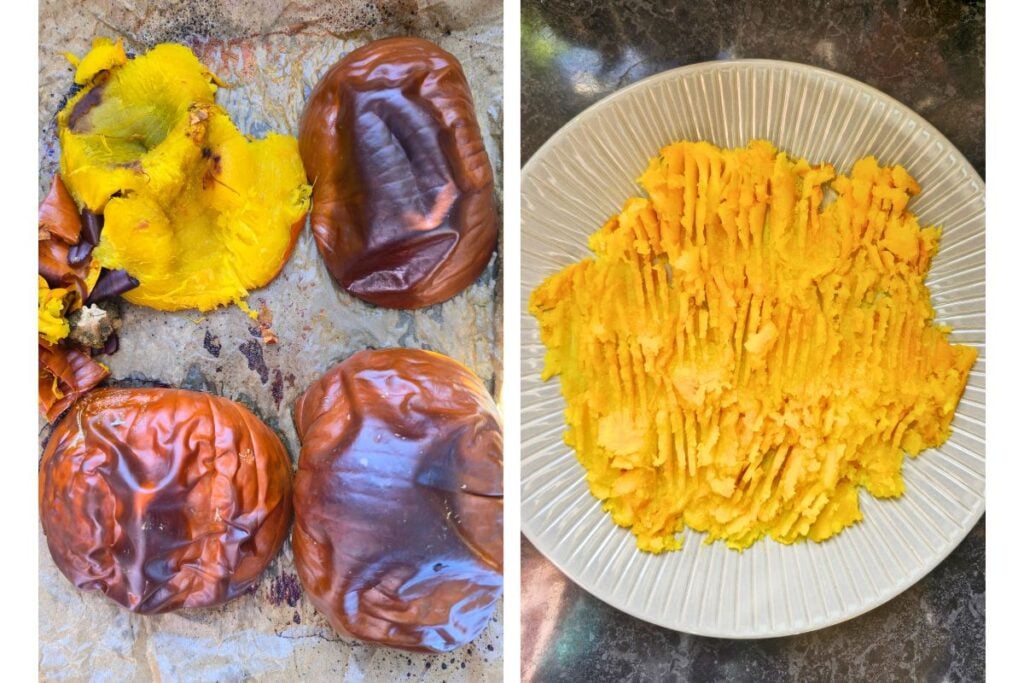
I roast my own pumpkin: halve the pumpkin, scoop out the seeds, brush the cut side with olive oil and roast it cut side down at 200°C for 45 minutes. The skin peels right off. Mash it well with a fork and remove any stringy bits. A small to medium pumpkin gives just over 300g of flesh, enough for two loaves, or this loaf plus a curry or stew. Roast it a day or two ahead and keep it in the fridge.
Want more fiber?
Swap 200g of the white flour for wholemeal. That takes each slice from about 1g of fiber to nearly 2g. Wholemeal flour soaks up more water, so the dough may feel a little firmer. If you like a browner loaf, my brown sourdough bread is a good one to try next.
| Step | Same-day bake | Overnight proof |
|---|---|---|
| Mix the dough, rest 30 minutes | 8:00am | 1:00pm |
| Knead, then 3 sets of slap and folds every 30 minutes | 8:30am to 9:30am | 1:30pm to 2:30pm |
| Bulk ferment ends (about 6 hours from mixing) | 2:00pm | 7:00pm |
| Preshape and rest (10 to 15 minutes) | 2:00pm | 7:00pm |
| Shape and into the banneton | 2:15pm | 7:15pm, then into the fridge |
| Proof | 2:15pm to 5:00pm | Overnight in the fridge |
| Freezer for 20 minutes while the oven preheats | 5:00pm | Skip, bake straight from the fridge |
| Bake (35 minutes lid on, 15 minutes lid off) | 5:20pm to 6:10pm | 8:00am to 8:50am |
| Cool, then slice | From 7:10pm | From 9:50am |
Overnight proof: shape the loaf in the evening, cover the banneton and refrigerate it overnight, then bake it straight from the fridge. Times are based on a kitchen at around 21°C (70°F) and an active starter. Go by the dough, not the clock: the bulk ferment is done when the dough is domed and doubled.
How to make sourdough pumpkin bread (step-by-step)
Mix and build the dough
Mix
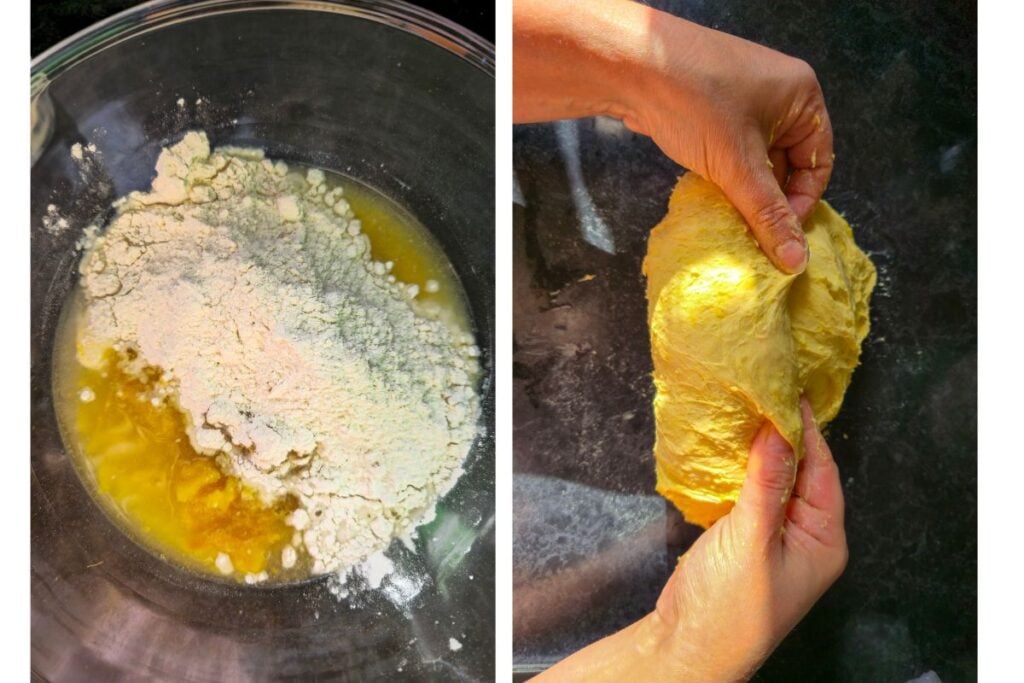
You can do this by hand or in a stand mixer from the start. By hand, mix the water, starter, pumpkin puree, honey and turmeric in a large bowl until the starter has broken up. Add the flour and salt and mix until there’s no dry flour left, then cover and leave for 30 minutes. Once the flour has hydrated, the dough is much less sticky to knead. In a stand mixer, add everything to the bowl and mix and knead with the dough hook for about 5 minutes, then go straight to the slap and folds.
Knead and slap and fold
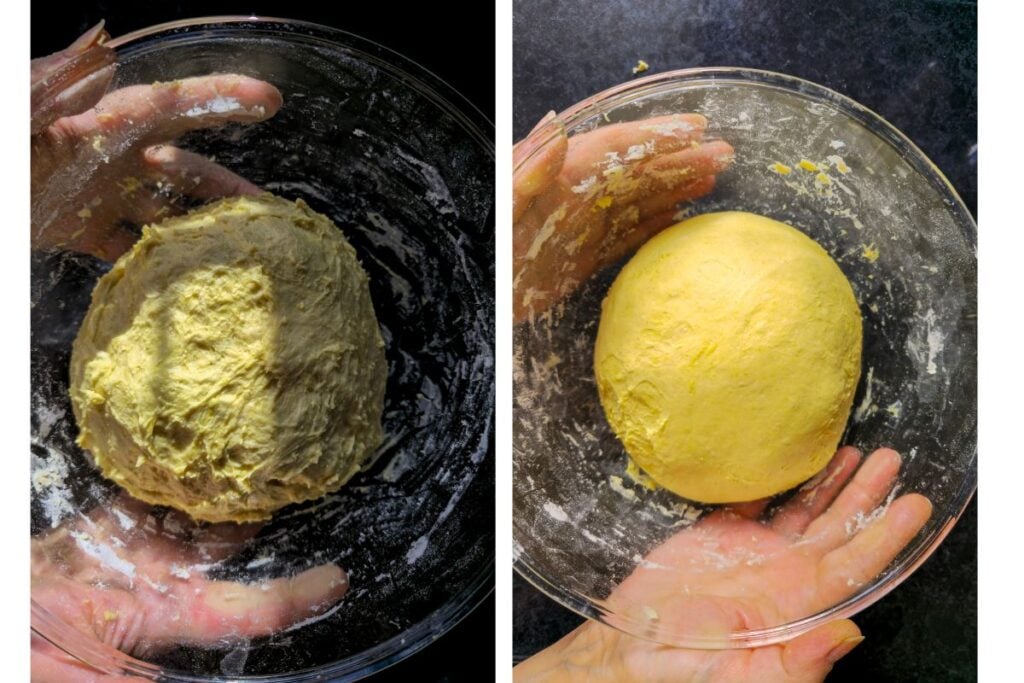
If you’re working by hand, turn the dough onto the bench and knead it for about 5 minutes, until it feels smoother. Then do 3 sets of slap and folds on the bench, one every 30 minutes, covering the dough in between. I’m a bit obsessed with slap and folds at the moment, because you can feel the dough with both hands and you know exactly when it’s getting stronger. Stretch and folds in the bowl work too.
Bulk ferment and shape
Bulk ferment
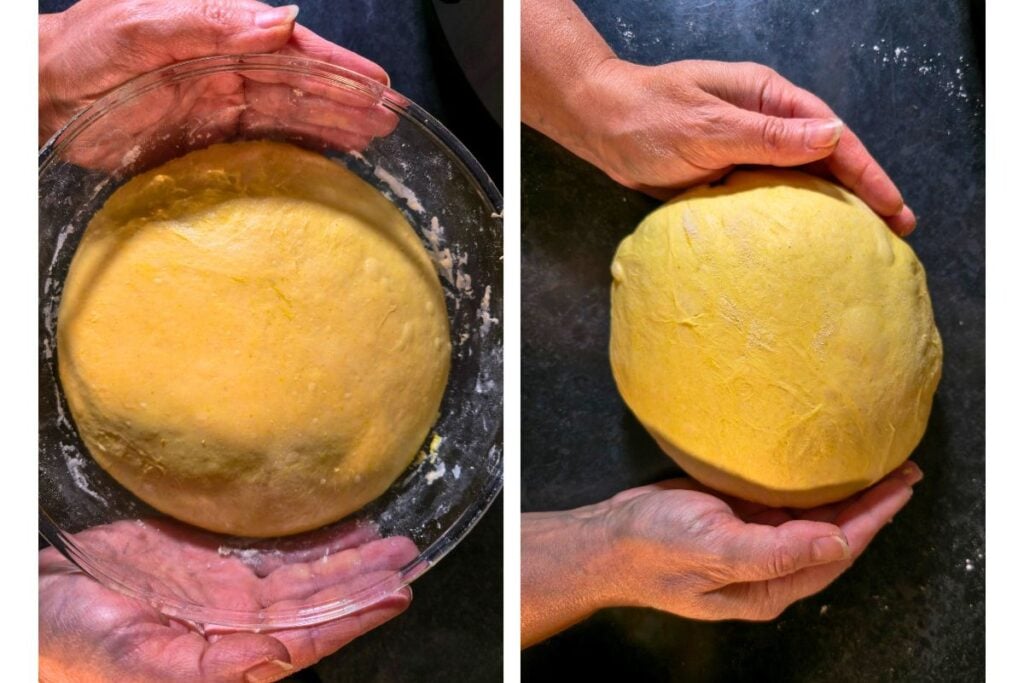
Cover the bowl and leave the dough to bulk ferment. In my kitchen at around 21°C (70°F), this took about 6 hours from mixing, but it can be anywhere from 5 1/2 to 8 hours depending on how warm your kitchen is and how lively your starter is. It’s ready when it’s domed and doubled in size.
Preshape
Tip the dough onto the bench, gather it into a loose round, then cover it with a tea towel and leave it for 10 to 15 minutes.
Shape
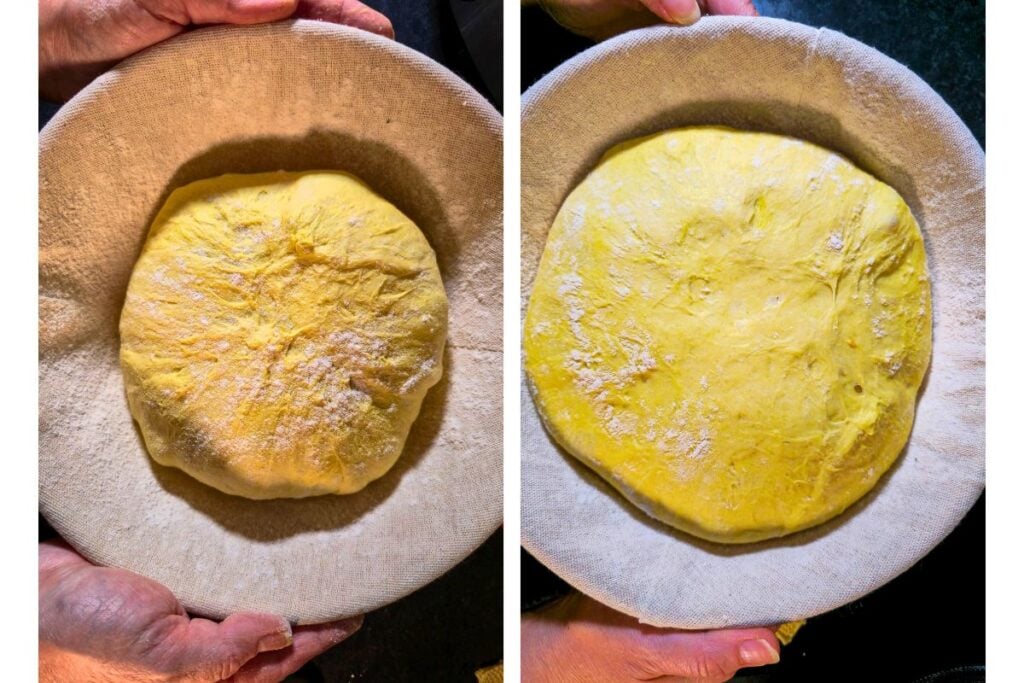
Shape the dough into a tighter boule and place it seam-side up in a round banneton dusted generously with rice flour.
Proof and bake
Proof
Cover the banneton and proof the dough at room temperature for about 3 hours, or put it in the fridge overnight and bake it straight from the fridge the next day. If you’re baking the same day, put the banneton in the freezer, uncovered, for about 20 minutes while the oven heats. The dough firms up and scores far more cleanly.
Bake
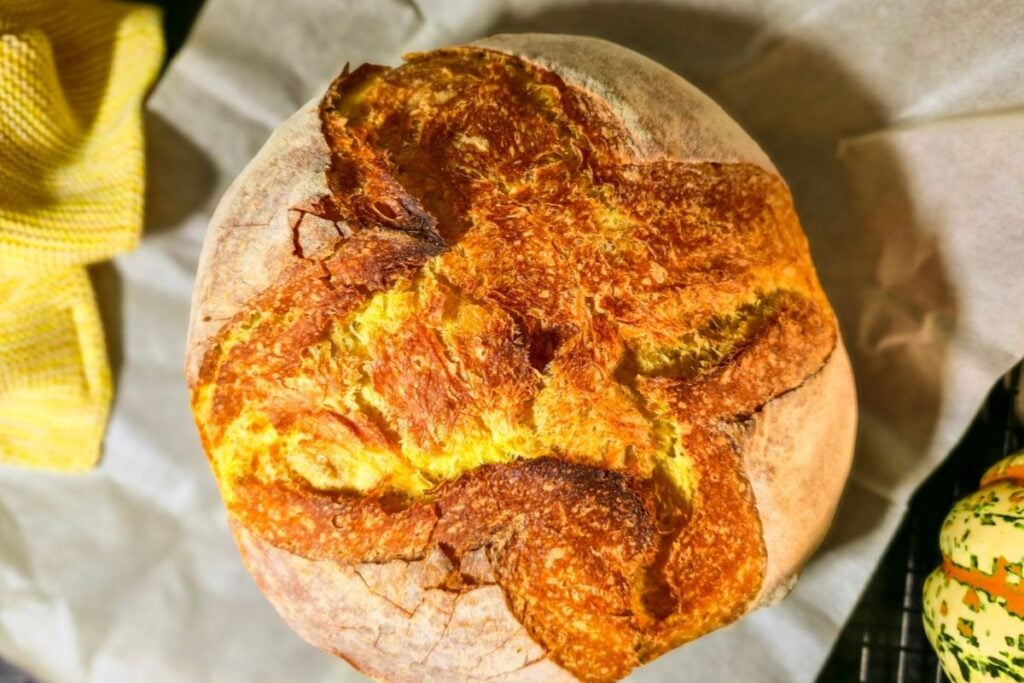
Preheat the oven to 220°C fan (240°C conventional / 465°F). Turn the dough out onto parchment, score a simple cross across the top, and lower it into a cold Dutch oven. There’s no need to preheat the pot. Bake for 35 minutes with the lid on, then take the lid off and bake for another 15 minutes until it’s deep golden brown.
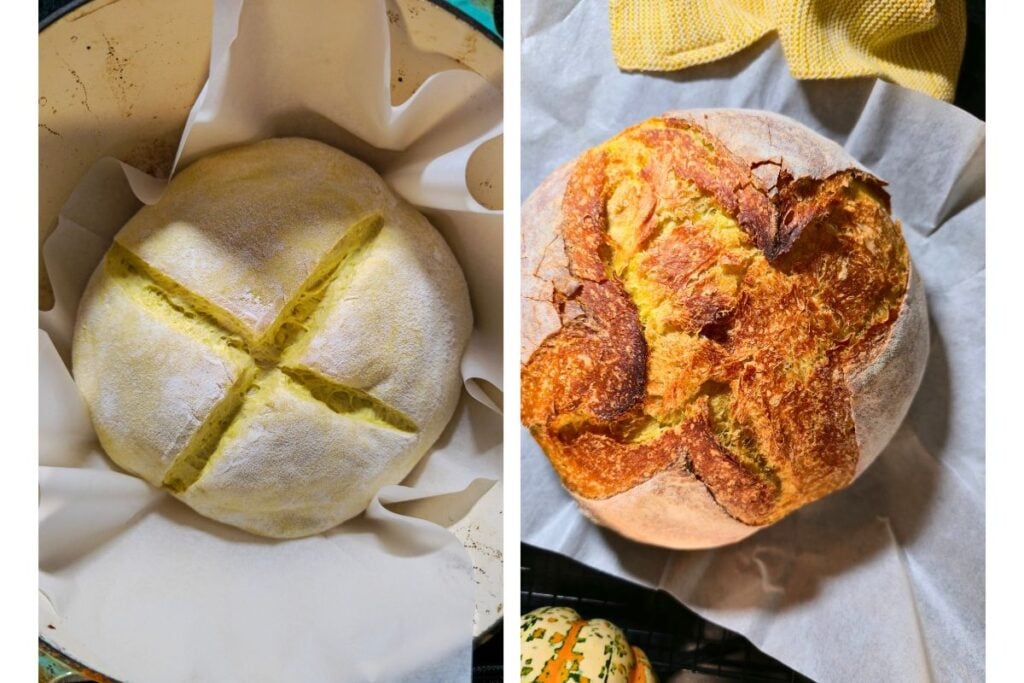
Cool
Cool the loaf on a wire rack for at least an hour before you slice it. The crumb is still setting, and a hot loaf will gum up under the knife.
Pro Tips
- Go by the dough, not the clock. The 6-hour bulk ferment is from my kitchen at around 21°C (70°F). Give it longer if your kitchen runs cooler, and look for a domed dough that’s doubled in size.
- If you’re kneading by hand, don’t skip the 30-minute rest after mixing. Kneading is much easier once the flour has had time to soak up the water.
- Slice the whole loaf once it’s cool and freeze the slices, so you can toast them straight from frozen.
Preparation time
About 30 minutes hands-on, spread across mixing, kneading and the slap and folds. If you’re roasting your own pumpkin, do it a day or two ahead.
Rising time
About 6 hours for the bulk ferment, then about 3 hours in the banneton, or overnight in the fridge.
Baking time
50 minutes (35 minutes with the lid on, 15 minutes with it off).
Total time
About 10 1/2 hours, plus at least an hour of cooling. Almost all of it is hands-off.
Nutritional benefits
Pumpkin is rich in beta-carotene, which your body turns into vitamin A, and both the pumpkin and the turmeric count toward your 30 plants a week. The long sourdough ferment does its usual work on the flour too, and if you slice and freeze the loaf, the cooled and frozen starch becomes a little more resistant to digestion, which means more of it behaves like fiber. For a bigger fiber boost, swap 200 g flour for wholemeal.
Servings
This recipe makes one boule, about 16 slices.
What to serve with sourdough pumpkin bread
- Thick toasted slices with salted butter
- Alongside a bowl of autumn soup, like my Italian pumpkin soup, cauliflower and corn chowder or leek and potato soup
- This is the bread for a special sandwich: thick slices slathered with homemade mayo, cradling sharp cheddar and my natural cauliflower pickles.
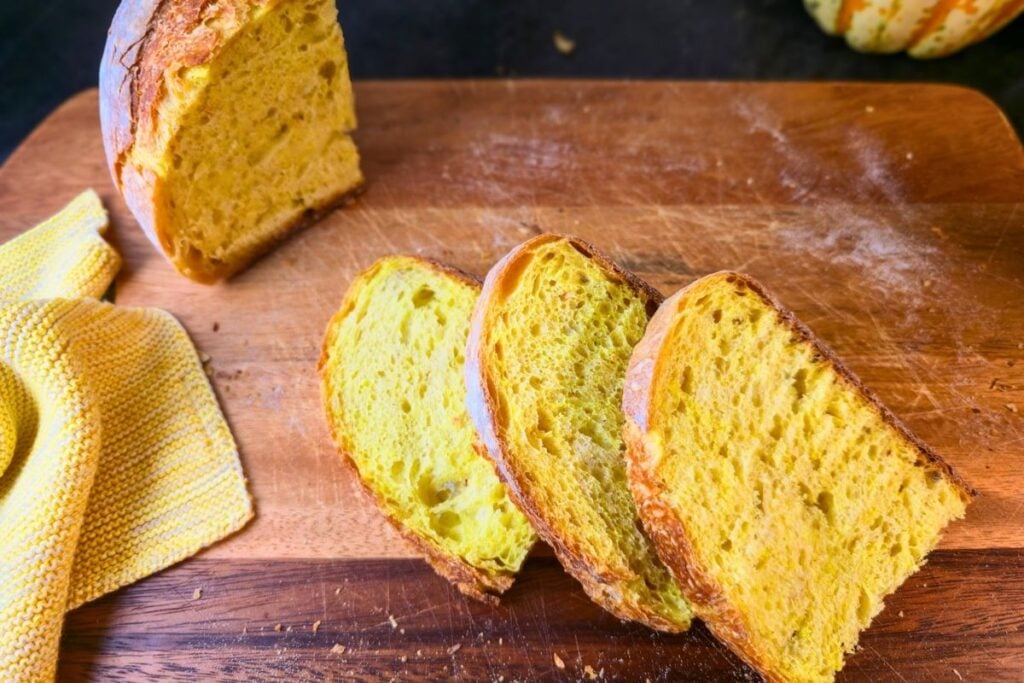
If you’ve got a can of pumpkin puree in the cupboard or some roasted pumpkin in the fridge, this is a good way to put it to use. Give the dough the time it needs, feel it change with each set of slap and folds, and you’ll have a golden loaf for toast all week. Let me know in the comments how yours turned out.
recipe FAQ
Yes. Plain canned pumpkin puree works well. Just make sure it isn’t pumpkin pie filling, which is already sweetened and spiced.
Yes. After shaping, cover the banneton and put it in the fridge overnight, then bake it straight from the fridge.
No. Stretch and folds in the bowl work too. I just find slap and folds easier to judge because you can feel the dough with both hands.
Yes. Swap 200g of the white flour for wholemeal to nearly double the fiber per slice. The dough may feel a little firmer, because wholemeal soaks up more water.
Sourdough Pumpkin Bread

Made this? A quick star rating above helps other readers find it.
Equipment
- kitchen scale
- large mixing bowl
- Stand mixer with dough hook (optional)
- Dough scraper (optional, for shaping)
- Round banneton or proofing basket
- Bread lame or sharp razor blade (for scoring)
- Dutch oven
- Parchment paper
- Wire cooling rack
Ingredients
- 200 g water
- 100 g active sourdough starter 100% hydration
- 150 g pumpkin puree from roasted pumpkin or canned, plain not pie filling
- 1 tsp honey optional
- 500 g strong white bread flour
- 10 g salt
- 1/2 tsp ground turmeric optional, for color
- rice flour for dusting the banneton
Instructions
Mix
- Add the water, starter, pumpkin puree, honey (if using) and turmeric to a large bowl and mix until the starter has broken up. Add the flour and salt and mix until there’s no dry flour left. Cover and rest for 30 minutes.200 g water, 100 g active sourdough starter, 150 g pumpkin puree, 1 tsp honey, 500 g strong white bread flour, 10 g salt, 1/2 tsp ground turmeric
- Or mix and knead everything in a stand mixer with a dough hook for about 5 minutes, then go straight to the slap and folds.
Knead and slap and fold
- Turn the dough onto the bench and knead for about 5 minutes, until it feels smoother.
- Do 3 sets of slap and folds on the bench, one every 30 minutes, covering the dough in between. Stretch and folds in the bowl work too.
Bulk ferment
- Cover and leave the dough to bulk ferment for about 6 hours from mixing at around 21°C (70°F). It can take 5 1/2 to 8 hours depending on your kitchen, so go by the dough, not the clock. It’s ready when it’s domed and doubled in size.
Preshape and shape
- Tip the dough onto the bench, gather it into a loose round, cover with a tea towel and rest for 10 to 15 minutes.
- Shape it into a tighter boule and place it seam-side up in a round banneton dusted with rice flour.rice flour
Proof
- Cover and proof at room temperature for about 3 hours, or in the fridge overnight. If proofed overnight, bake it straight from the fridge.
- If you’re baking the same day, put the banneton in the freezer, uncovered, for about 20 minutes while the oven heats. The dough firms up and scores more cleanly.
Bake
- Preheat the oven to 220°C fan (240°C conventional / 465°F). Turn the dough out onto parchment, score a simple cross across the top, and lower it into a cold Dutch oven. Put the lid on.
- Bake for 35 minutes with the lid on, then remove the lid and bake for another 15 minutes, until deep golden brown.
Cool
- Cool on a wire rack for at least an hour before slicing.