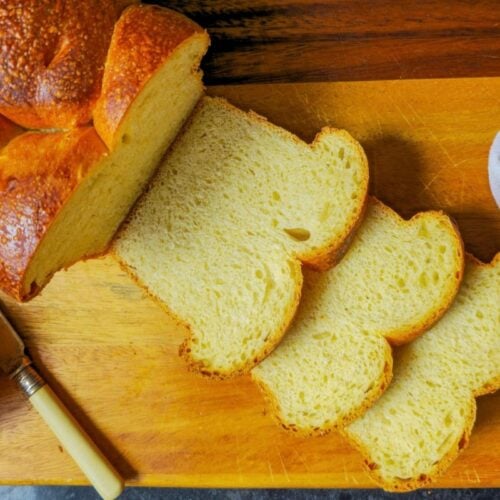
I grew up with enriched breads, and this sourdough brioche bread is a labor of love. In Romania, sweet, buttery, egg-rich doughs are part of how a family bakes, and my mom makes wonderful ones. This loaf started as one of her yeast brioche recipes, which I’ve adapted for my sourdough starter. It has the same soft, rich crumb, with a little extra depth from a long, slow ferment, and no commercial yeast.
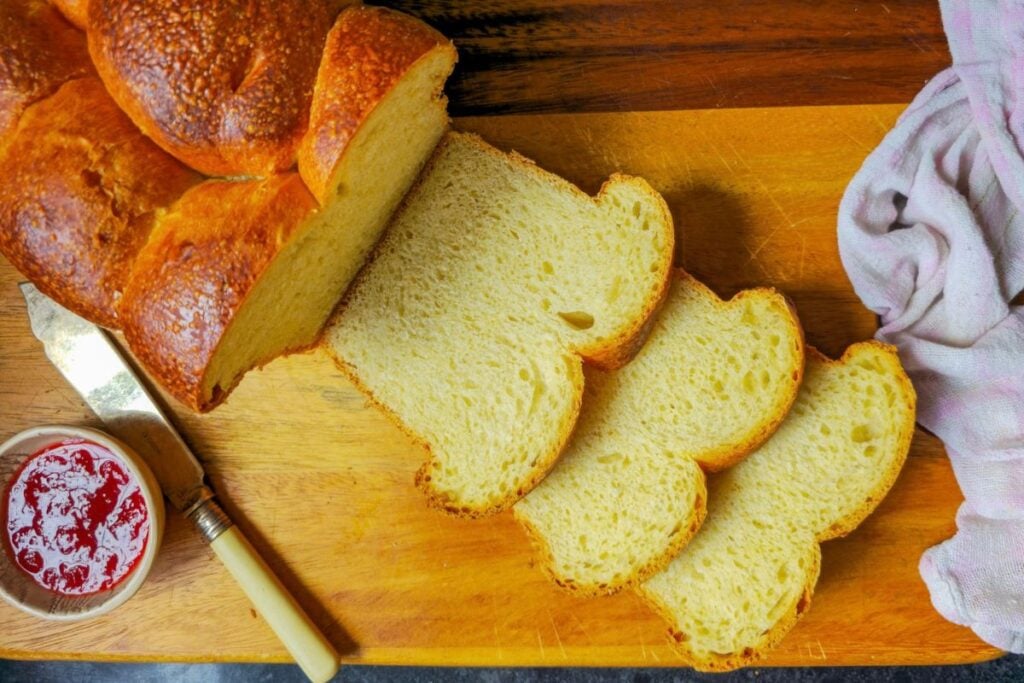
It isn’t a quick bake, but most of the time is hands-off. You mix the dough in the evening and let it rise on the bench overnight. The next day you shape it, give it a second rise and bake. You end up with a tall, deep golden loaf that tears into soft, buttery strands.
What you’ll love about this sourdough brioche
It takes a day from mixing to slicing, but almost all of that is the dough rising on its own.
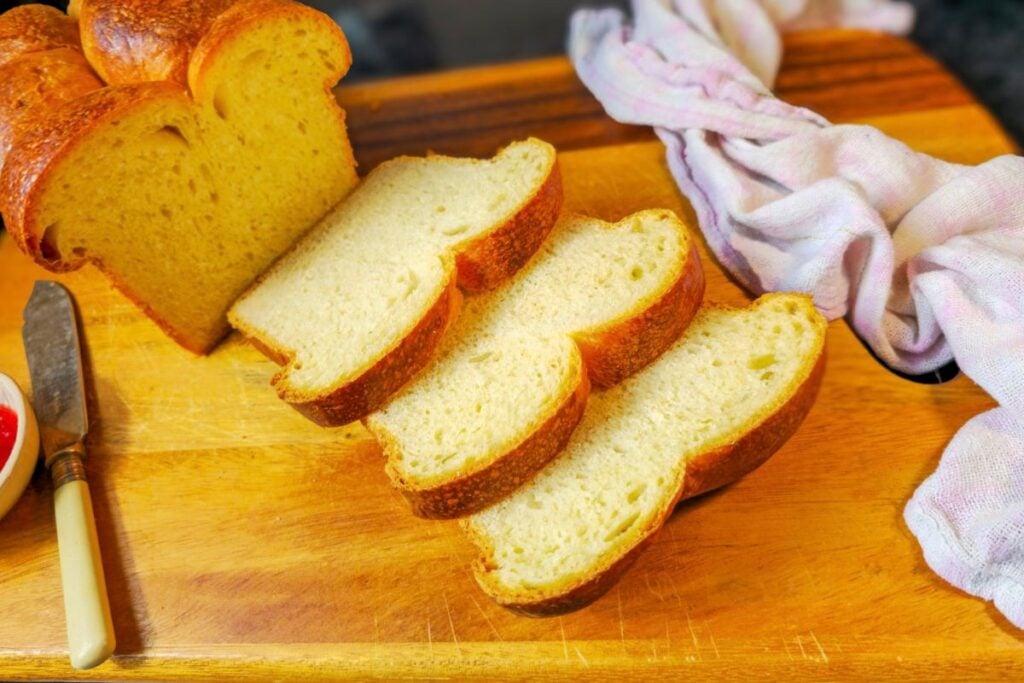
- Soft and rich, still light. Milk, egg, sugar and butter give it that classic brioche crumb, tender enough to tear by hand.
- The overnight ferment suits my working week. Mix and knead it after dinner and it rises while you sleep, with no stretch-and-folds at midnight.
- Natural sourdough rise. Your starter does all the leavening, and the long ferment builds a subtle, rounded flavor behind the sweetness.
- Simple shaping. Eight dough balls in a loaf tin bake into the classic bumpy brioche top, with no braiding or fiddly shaping. Great for beginner sourdough bakers.
- It freezes well. Slice it, freeze it, and toast slices whenever you want one.
Ingredients you’ll need
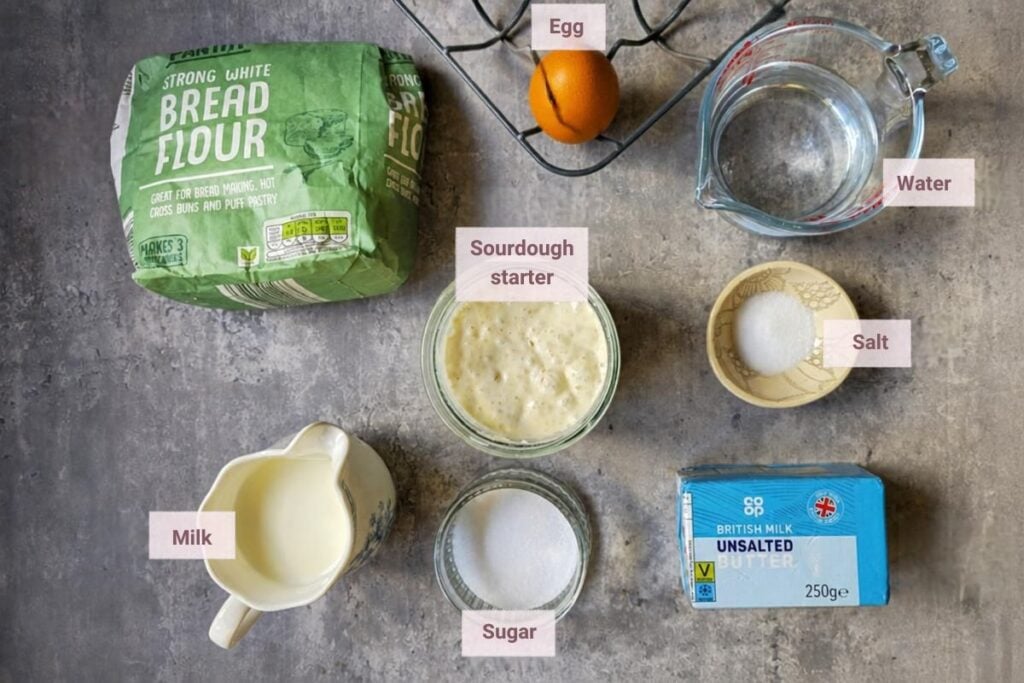
These are your everyday baking staples. The two things that matter most are an active starter (or levain) and incorporating the soft butter slowly.
- Strong white bread flour
- Active sourdough starter (100% hydration)
- Whole milk
- Water
- Sugar
- Salt
- Egg
- Unsalted butter, softened, or melted and cooled
- For the egg wash: egg yolk, milk and a pinch of salt
Starter: Use it when it’s active and at its peak. It’s 100% hydration, meaning it’s fed with equal weights of flour and water. To time it more precisely, build a levain about 4 hours before mixing: 35g starter, 35g flour and 35g water. Use it in place of the 100g active starter. I use the same method in my blueberry sourdough bread.
Milk: Room temperature is ideal. Slightly warm to the touch is fine too, especially in a cooler kitchen.
Butter: Unsalted. Softened butter or melted and cooled butter both work, so use whichever is easier.
| Step | Evening start | Morning start |
|---|---|---|
| Mix the dough and add the butter (about 30 minutes) | 8:00pm | 7:00am |
| Bulk ferment (about 12 hours) | 8:30pm to 8:30am | 7:30am to 7:30pm |
| Divide, shape and put in the tin | 8:30am | 7:30pm |
| Second rise in the tin (about 3 hours) | 8:45am to 11:45am | 7:45pm to 10:45pm |
| Preheat the oven and brush with egg wash | 11:45am | 10:45pm |
| Bake (35 to 40 minutes) | 12:00pm | 11:00pm |
| Cool completely, then slice | 12:40pm to around 3:00pm | Overnight, ready to slice in the morning |
Morning start, fridge option: after shaping at 7:30pm, cover the tin and refrigerate it to rise overnight instead. In the morning, leave it at room temperature for at least an hour, then brush with egg wash and bake. Times are based on a 22.5°C (73°F) kitchen and an active starter.
How to make sourdough brioche bread (step-by-step)
You can mix in the evening and bake the next morning, or start at 7am and bake the same evening. The schedule above shows both.
Mix the dough
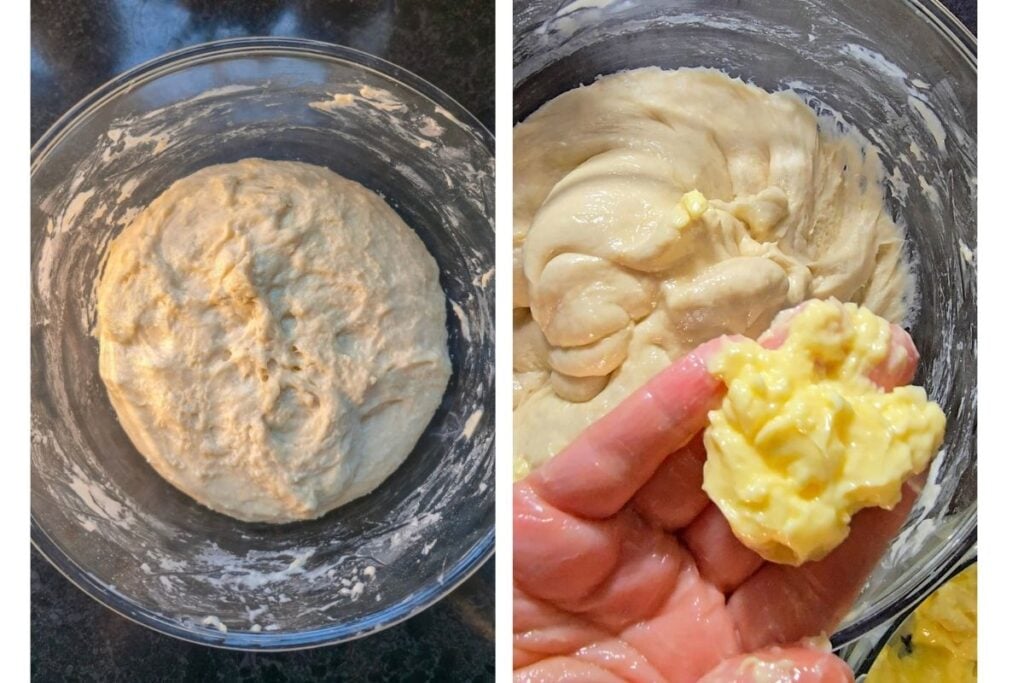
Put everything except the butter into a stand mixer fitted with a dough hook. Mix for 5 to 8 minutes, until the dough is smooth. You can also knead it by hand on the bench for 10 to 15 minutes. I actually prefer kneading it by hand. You can feel the dough turn smooth, and there’s no mixer bowl to wash, just the bench to wipe.
Add the butter
Add the butter in four stages, about a quarter at a time, and mix until each addition is fully absorbed before adding the next. Each addition takes 30 seconds to a minute in the mixer. By hand, you’ll feel the change: the dough goes slippery when the butter goes in, and it’s ready for the next batch once it stops being slippery.
Bulk ferment
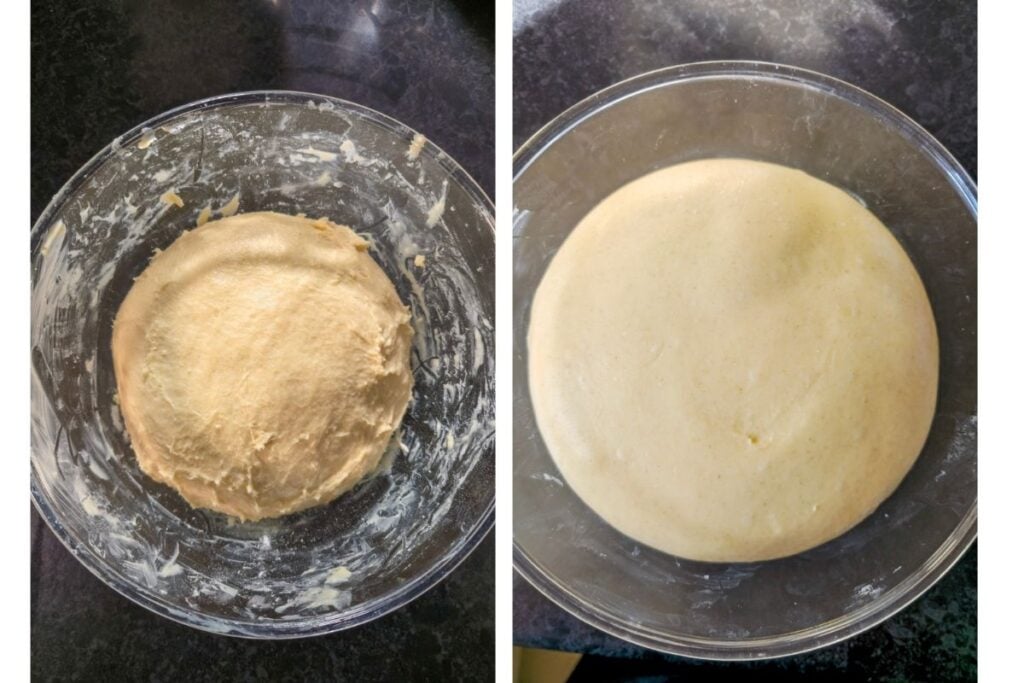
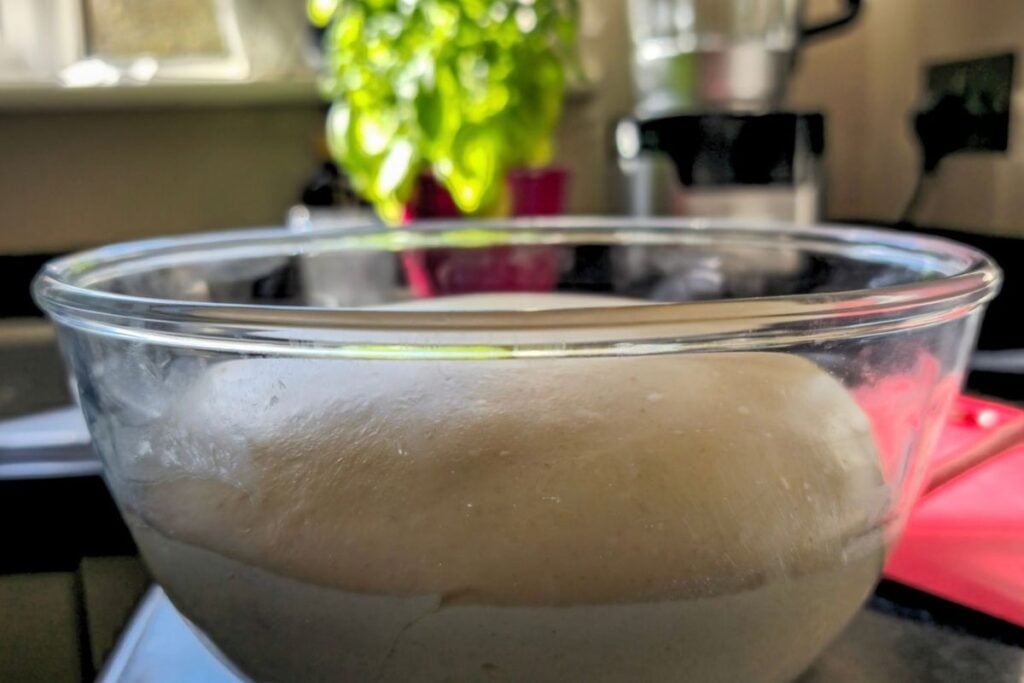
Transfer the dough to a bowl, cover it and leave it on the bench until it’s doubled and domed. In my kitchen at 22.5°C (73°F), with an active starter, this takes about 12 hours, which is why I usually mix it in the evening.
Divide and shape
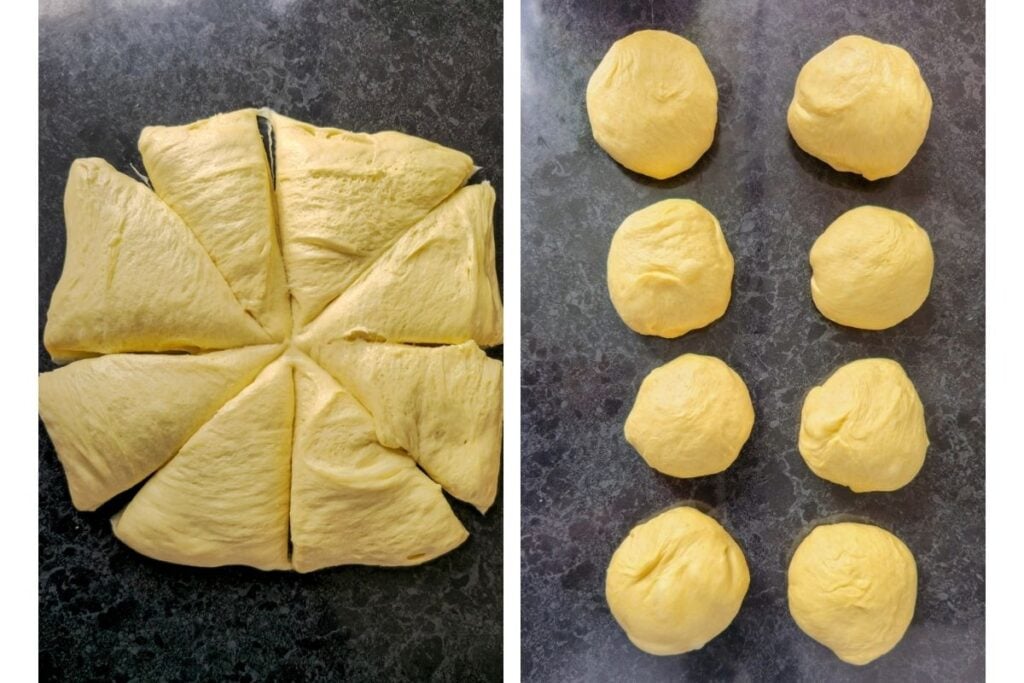
Turn the dough out onto the bench. You won’t need any flour. Divide it into 8 pieces and gently gather each one into a ball. Handle them as little as possible so you keep the air in.
Second rise and egg wash
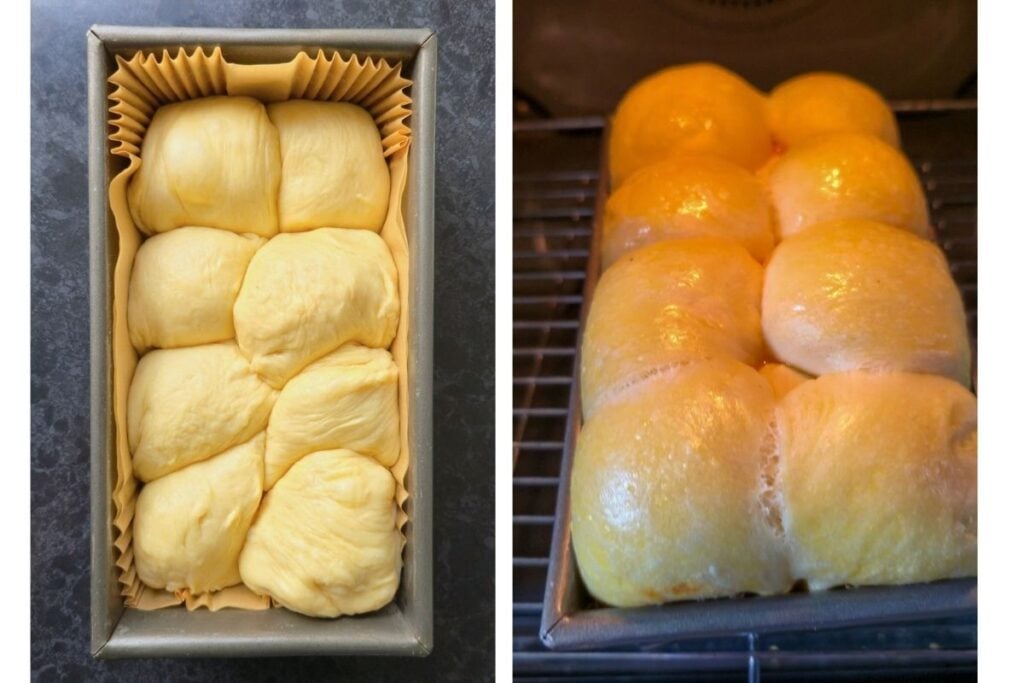
Place the balls in a lined or buttered loaf tin, two side by side, in four rows. Cover and leave on the bench for about 3 hours, until the dough has risen just over the top of the tin. Preheat the oven to 190°C fan (210°C conventional / 410°F), then whisk the egg yolk with the milk and a pinch of salt and brush it gently over the loaf.
Bake and cool
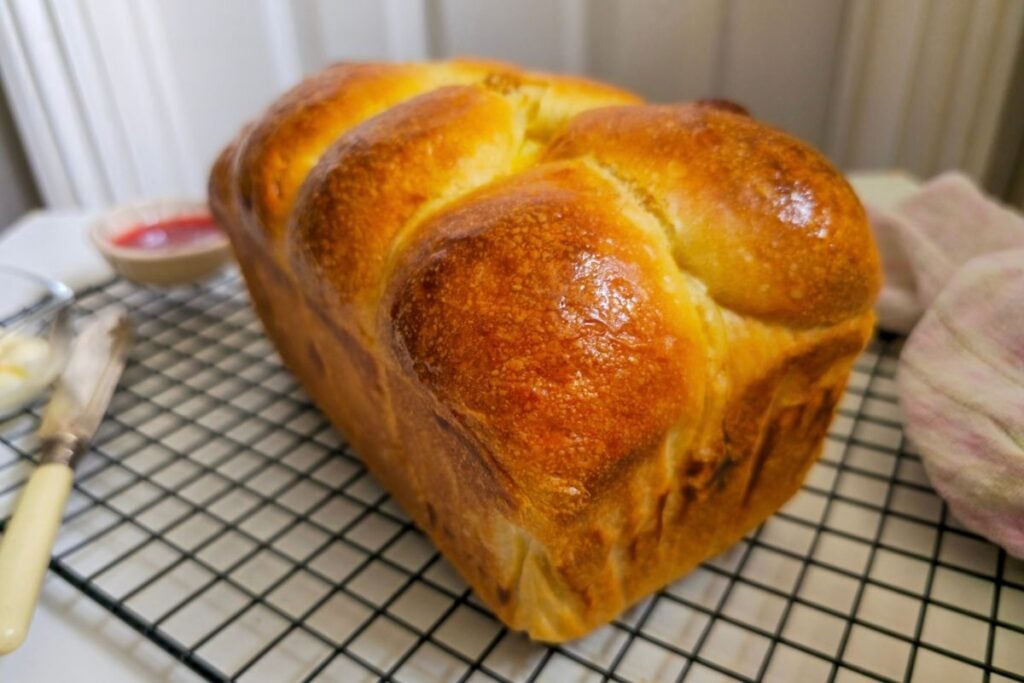
Put the loaf in, turn the oven down to 175°C fan (195°C conventional / 380°F) and bake for 35 to 40 minutes. If the top is browning fast, cover it loosely with foil after 30 minutes. It’s done when it’s a deep golden color and has risen well above the tin.
Turn the loaf onto a cooling rack and let it cool fully before slicing. This can take a good few hours, but the crumb is still setting while it cools, so it’s worth the wait.
Pro Tips
- Go by how the dough looks, not the clock. The times here are based on my kitchen at 22.5°C (73°F) with an active starter. A cooler kitchen or a slower starter can take up to 15 hours for the bulk ferment and up to 5 hours in the tin, and a warmer one will be quicker. It’s ready when it has doubled and looks puffy, domed and light.
- This dough likes warmth, so leave the bulk ferment on the bench, not in the fridge.
- If an overnight bulk ferment doesn’t suit you, mix at 7am instead. The bulk ferment finishes around 7:30pm, and then you have two options. Give it the second rise and bake around 11pm, then leave it to cool overnight. Or shape it into the tin, cover it and put it in the fridge overnight, then leave it at room temperature for at least an hour in the morning before brushing with egg wash and baking.
- If you’re using melted butter, let it cool first, and whichever you use, add it slowly to get that smooth rich dough.
- Handle the dough balls lightly. The less you work them, the softer and airier the finished loaf.
- Keep an eye on the color. The sugar, milk and egg brown faster than a plain loaf, so have foil ready from the 30-minute mark.
Preparation time
About 30 minutes hands-on, most of it mixing the dough and working in the butter.
cooking time
35 to 40 minutes.
Rising time
About 12 hours for the bulk ferment at 22.5°C (73°F), then about 3 hours in the tin.
Total time
About 16 hours, plus a few hours of cooling. Nearly all of it is hands-off while the dough rises.
Why sourdough
This brioche is raised entirely by sourdough starter, with no commercial yeast. The long, slow ferment gives it a deeper, more rounded flavor behind the sweetness than a quick yeasted brioche. It’s still an enriched bread, so it’s one for weekends and treats rather than an everyday loaf.
Servings
This recipe makes one loaf, about 12 slices.
Serving and leftover ideas

- If any of it goes stale, it’s ideal for French toast or bread pudding, because the rich crumb soaks up custard without falling apart. I make a very cheesy breakfast strata with lots of Parmesan around the holidays.
- For an everyday loaf to bake alongside it, my sourdough sandwich bread is a good one to have in your rotation.
How to store and freeze sourdough brioche
- Keep it well wrapped or in a bread bag at room temperature.
- For longer storage, slice the whole loaf once it’s completely cool, bag the slices and freeze them (I use a waxed bread bag). You can toast them straight from frozen.
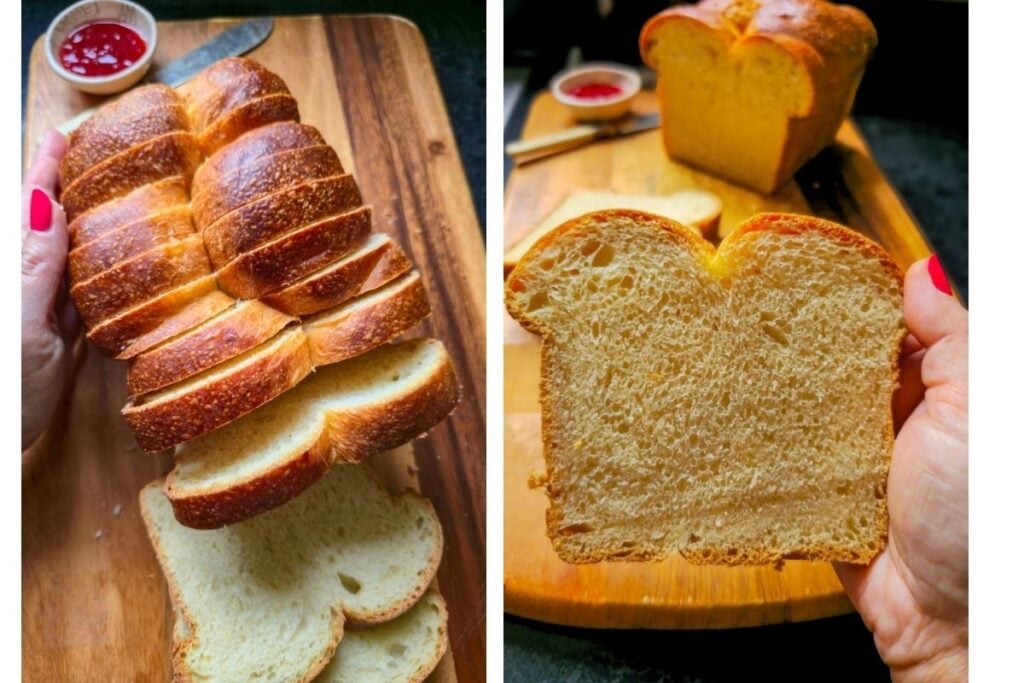
If you’ve only ever made brioche with yeast, give this a go next time your starter is bubbly and you have a weekend in front of you. Mix it after dinner, shape it the next day, and you’ll have a loaf that tears into soft, buttery strands. Let me know how yours turns out, and if you end up with a stale slice or two, make French toast with it.
Sourdough Brioche Bread

Made this? A quick star rating above helps other readers find it.
Equipment
- Stand mixer with dough hook (optional)
- large bowl
- 2lb (900g) loaf tin 21.5 x 11 cm (8.5 x 4.5-inch)
- pastry brush
Ingredients
Dough
- 500 g strong white bread flour
- 100 g active sourdough starter 100% hydration
- 200 g whole milk room temperature
- 50 g water
- 50 g sugar
- 10 g salt
- 1 large egg
- 100 g unsalted butter softened, or melted and cooled
Egg wash
- 1 egg yolk
- 3 tbsp milk
- 1 pinch salt
Instructions
- Add everything except the butter to a stand mixer fitted with a dough hook. Mix for 5 to 8 minutes until smooth, or knead by hand on the bench for 10 to 15 minutes.500 g strong white bread flour, 100 g active sourdough starter, 200 g whole milk, 50 g water, 50 g sugar, 10 g salt, 1 large egg
- Add the butter in four stages, mixing until each addition is fully absorbed before adding the next (30 seconds to 1 minute each in a mixer, or until the dough stops feeling slippery by hand).100 g unsalted butter
- Cover the bowl and leave it on the bench until the dough has doubled and domed, about 12 hours at 22.5°C (73°F) with an active starter. Mixing in the evening lets it ferment overnight.
- Turn the dough onto the bench (no flour needed) and divide it into 8 pieces. Gently gather each one into a ball, handling it as little as possible.
- Arrange the balls in the lined or buttered loaf tin, two side by side in four rows. Cover and leave for about 3 hours, until the dough rises just over the top of the tin.
- Preheat the oven to 190°C fan (210°C conventional / 410°F). Whisk the yolk, milk and salt, then brush over the loaf.1 egg yolk, 3 tbsp milk, 1 pinch salt
- Put the loaf in, reduce the oven to 175°C fan (195°C conventional / 380°F) and bake for 35 to 40 minutes, until deep golden and well risen above the tin. Cover loosely with foil after 30 minutes if it’s browning fast.
- Turn the loaf out onto a wire rack and cool completely before slicing, which can take a few hours.